Reasonable Risk automates the Proven Governance System, a method for
managing and reducing cyber security risk using Duty of Care Risk Analysis,
also known as DoCRA. This presentation will explain how DoCRA is helping
organizations manage cyber security risk as capably as they manage any
other part of their business.
1. What is Duty of Care Risk Analysis?
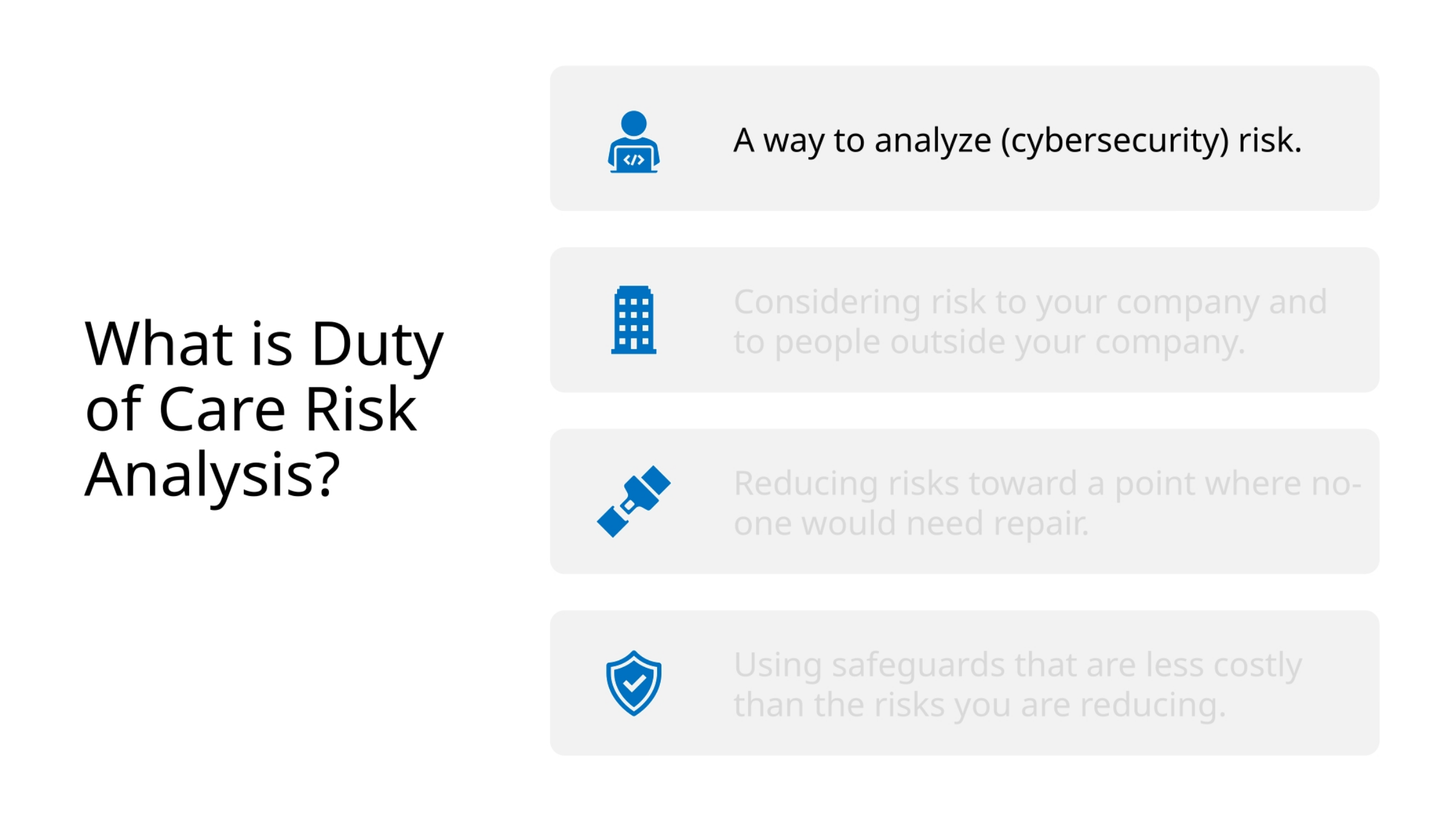
Put most simply, DoCRA is a way to analyze risks, and is most often used
to analyze cyber security risk.
2. What is Duty of Care Risk Analysis?
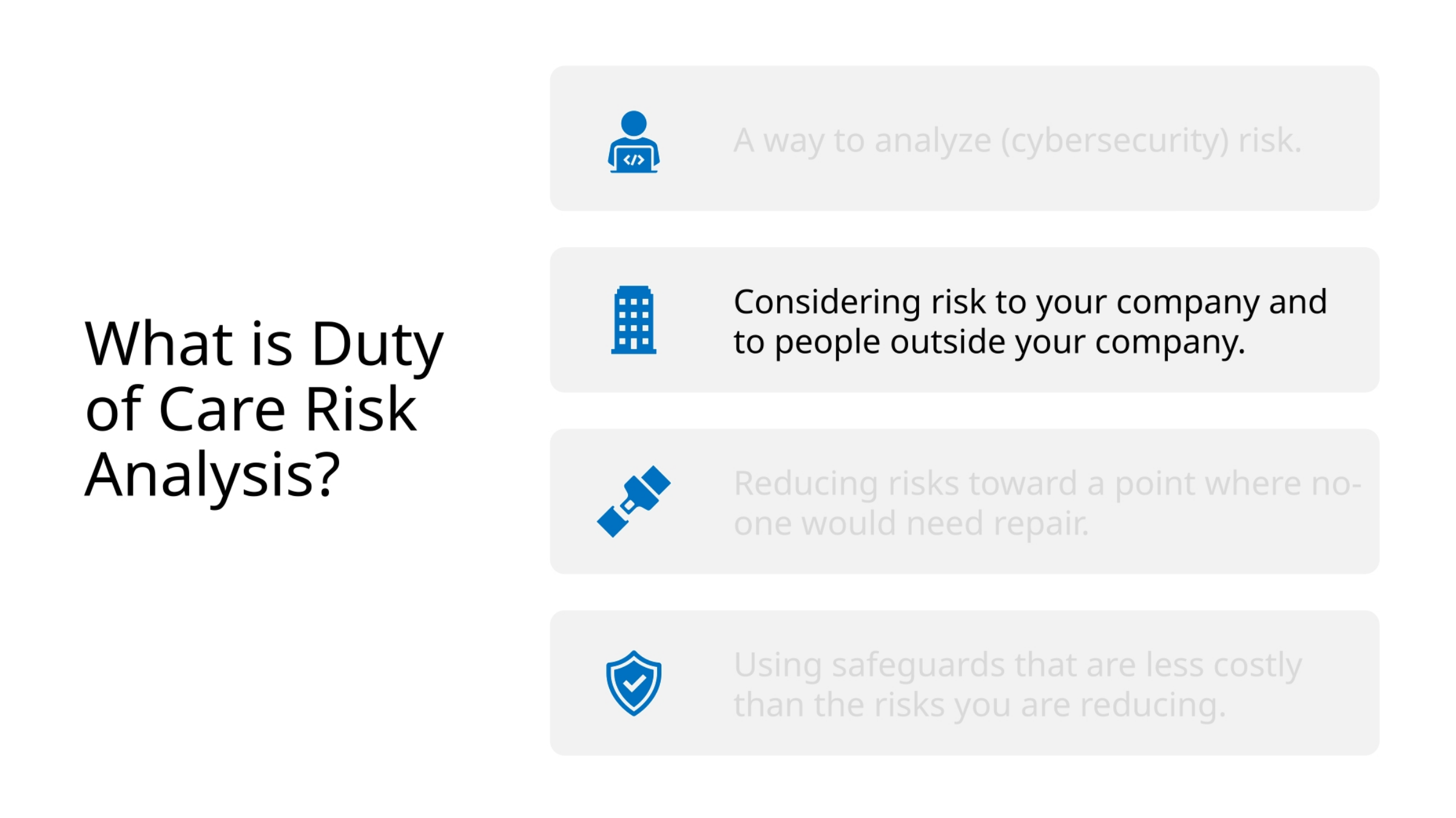
DoCRA considers risks both to the company that is evaluating their risk,
and external parties, such as customers, the public, students, or patients.
After all, when you suffer a breach, you don't sue yourself. People
outside your company do. So companies should show how they consciously
address those public risks
3. What is Duty of Care Risk Analysis?
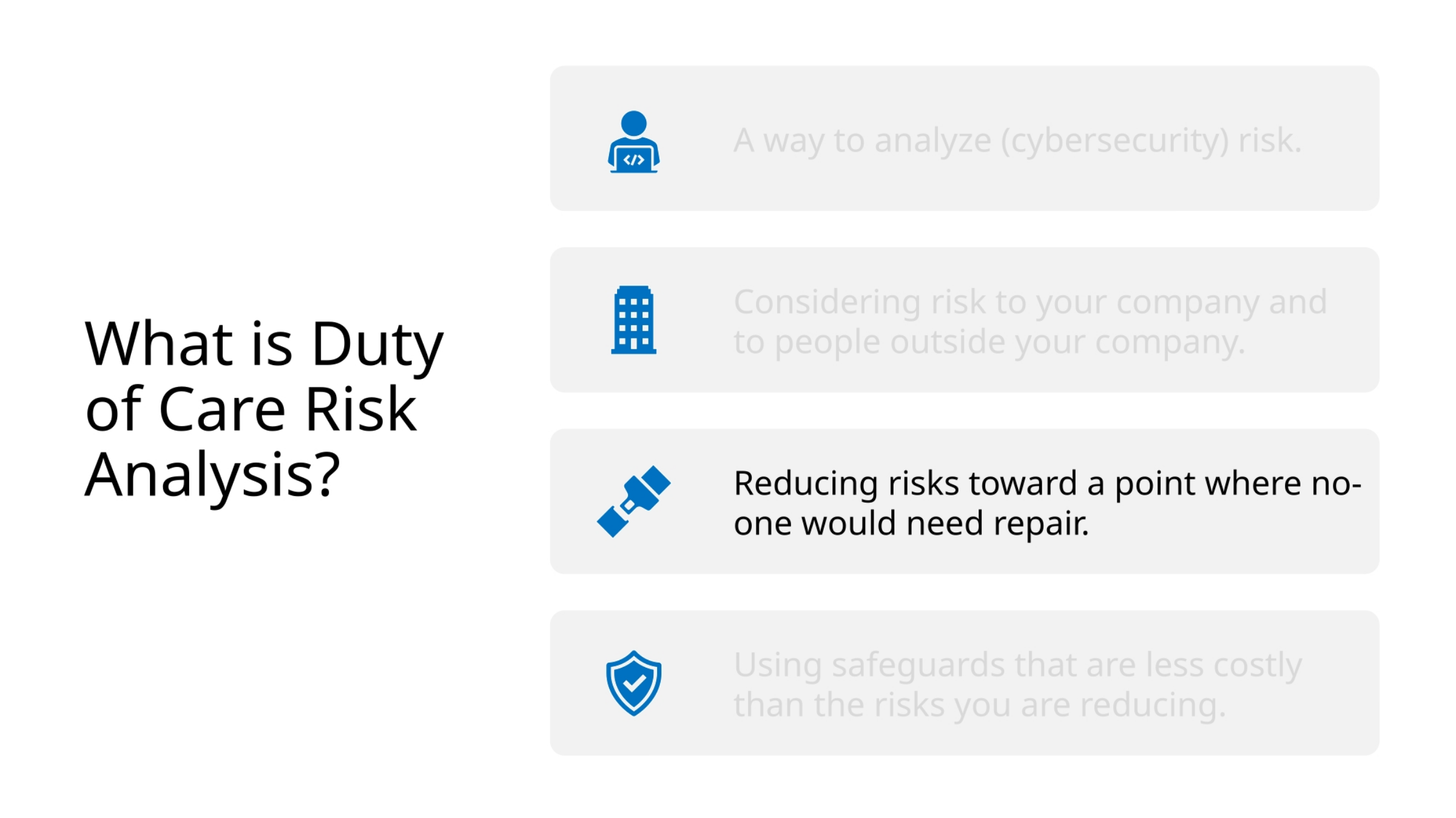
DoCRA also sets a plan for safeguards that would bring risks down so
low that no repair would be necessary, either for the company or others
who may be harmed by an incident.
4. What is Duty of Care Risk Analysis?
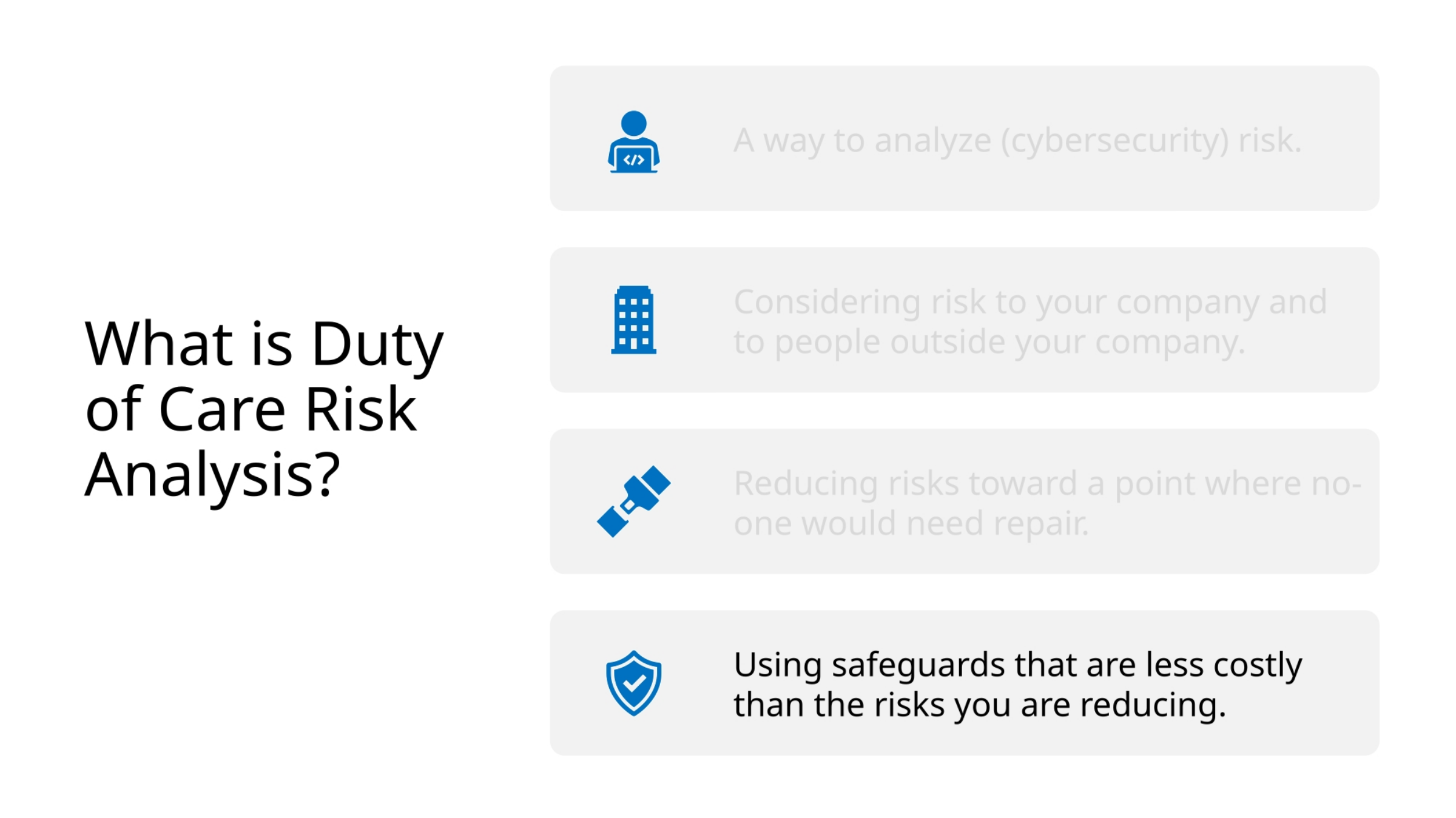
Finally, DoCRA takes advantage of a concept in law called reasonableness
that does not allow an organization to invest more in a safeguard than
the risk they are reducing. In other words, the cure can not be worse
than the disease.
5.
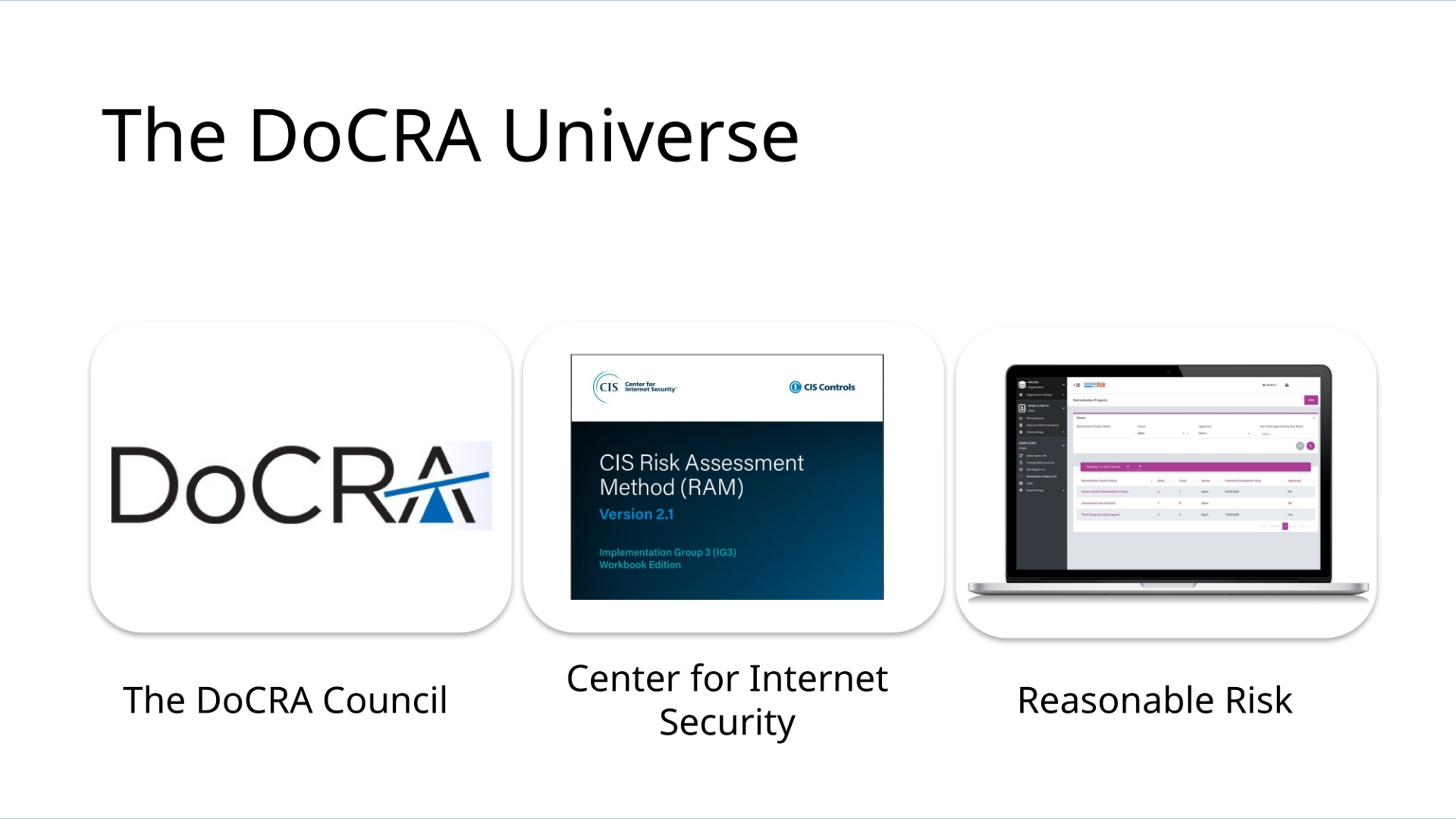
DoCRA is used for many purposes. It is an open risk analysis standard
that is maintained by the nonprofit DoCRA Council. It is the basis for
Center for Internet Security's Risk Assessment Method, also known as
C.I.S. ram. And it is the backbone of the Reasonable Risk SaaS Application.
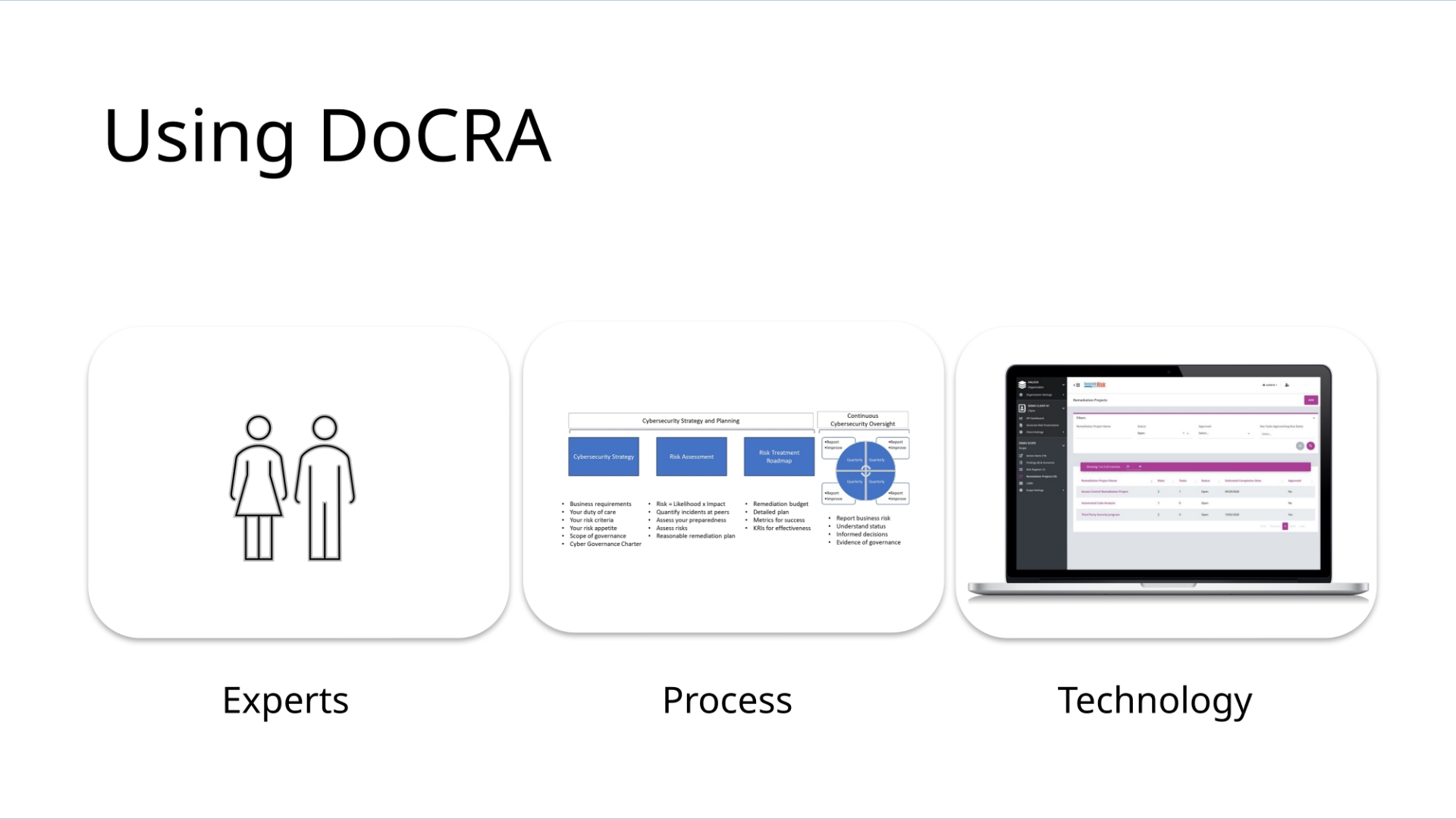
6.
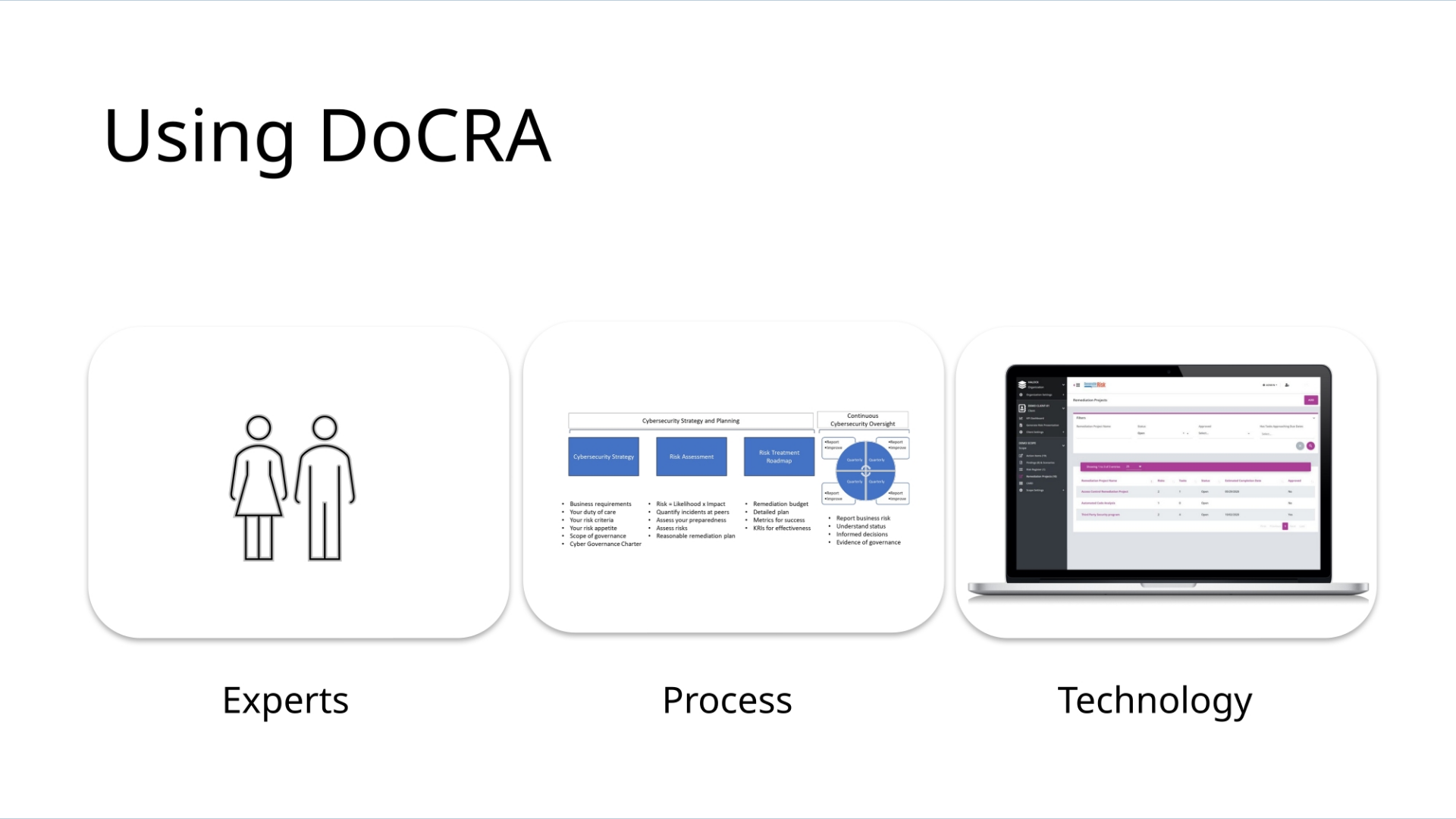
Organizations implement DoCRA by experts using processes with technologies,
all of which we'll reference in this presentation.
7. What Problems Does It Solve?
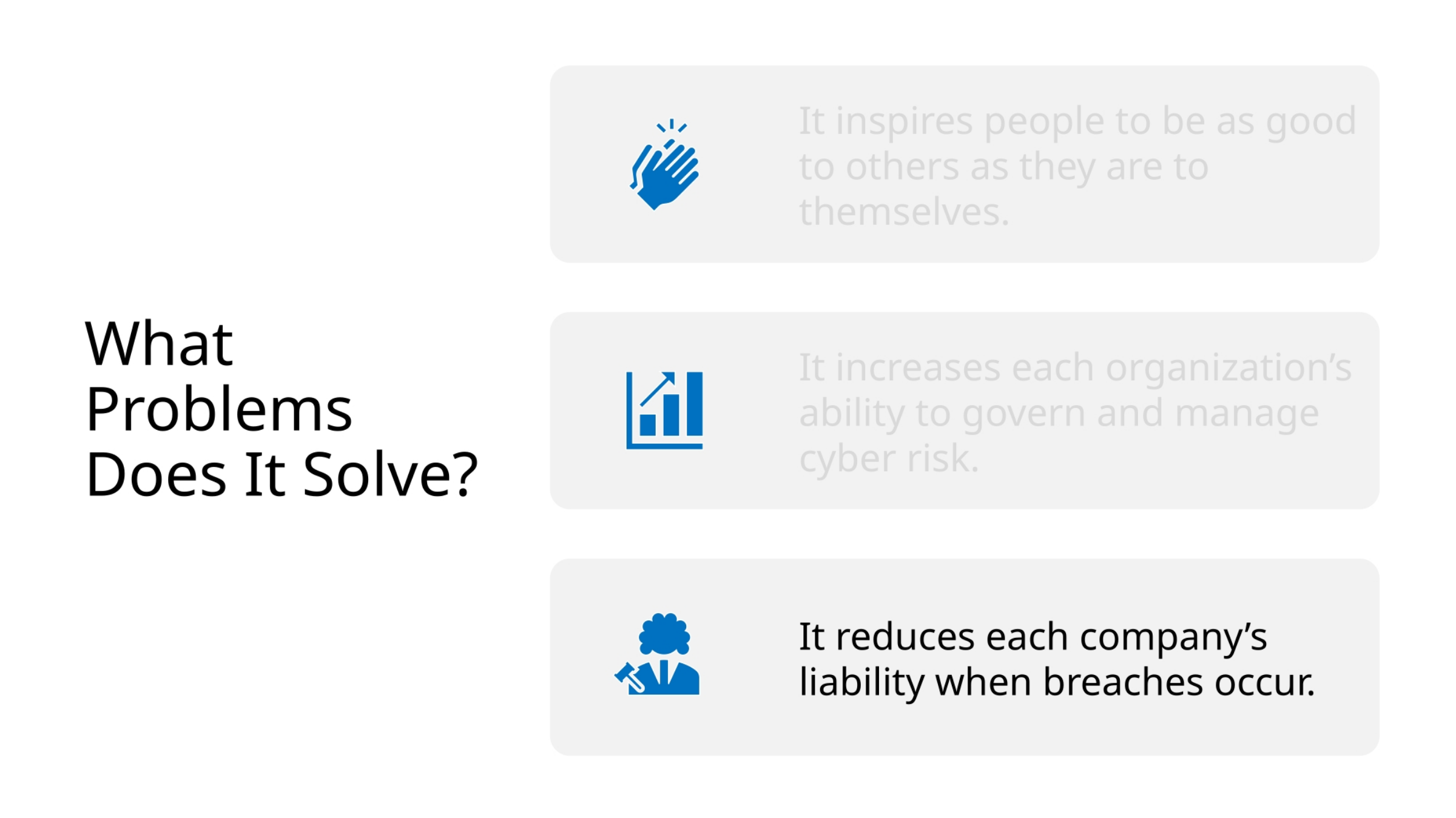
DoCRA inspires people and organizations to be good neighbors, and to
integrate their duty of care for others into their business model.
Tens of thousands of organizations have adopted DoCRA and can demonstrate
that every risk, and every investment, treats the public with as much
care as they treat their own organization. DoCRA and Reasonable Risk
simply give those organizations instructions for exercising their good
conscience, and providing evidence that they did when things go wrong.
8. What Problems Does It Solve?
Because DoCRA expresses risk in plain language, non-technical executives
can begin engaging cyber security needs and opportunities the way they
manage other parts of their business.
9. What Problems Does It Solve?
And when companies demonstrate that their executives and technicians
made cyber security investments that reasonably addressed their business
requirements and their duty to protect others, plaintiffs and regulators
find it hard to demonstrate negligence. This makes liabilities go away.
10. What Problem Does It Solve?
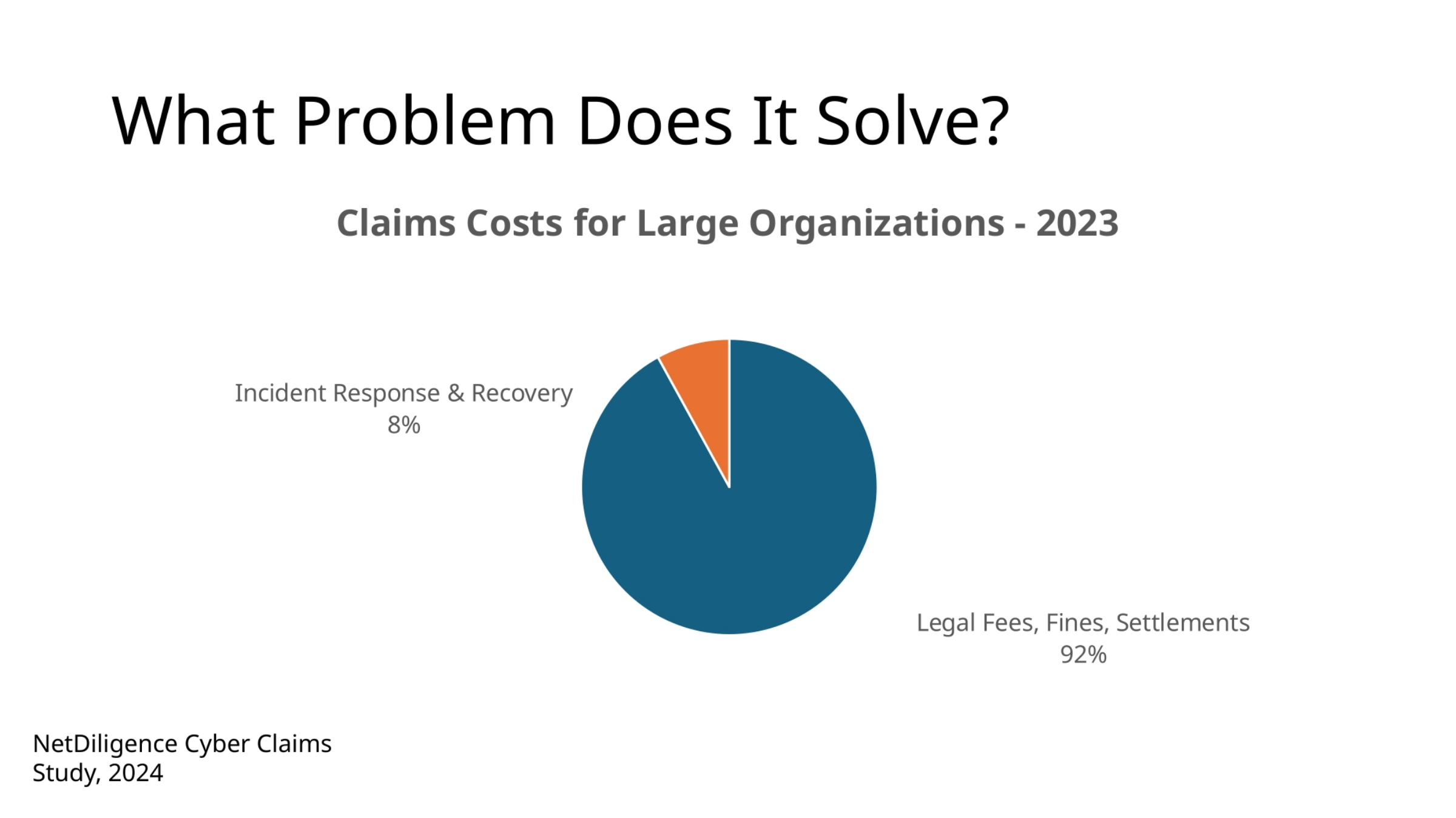
According to the 2024 NetDiligence Cyber Claims Study, legal fees, fines,
and settlements account for 92% of claims costs for large organizations
in 2023. Only 8% went to incident response and recovery. Consider what
this means. In cyber security, most companies focus on tools and technologies
that prevent attacks, the 8%. But one control - effective risk management
and governance - is what takes care of 92% of the actual risk for these
companies. By focusing on one control they can reduce 92% of their risk.
11. Who Uses DoCRA?
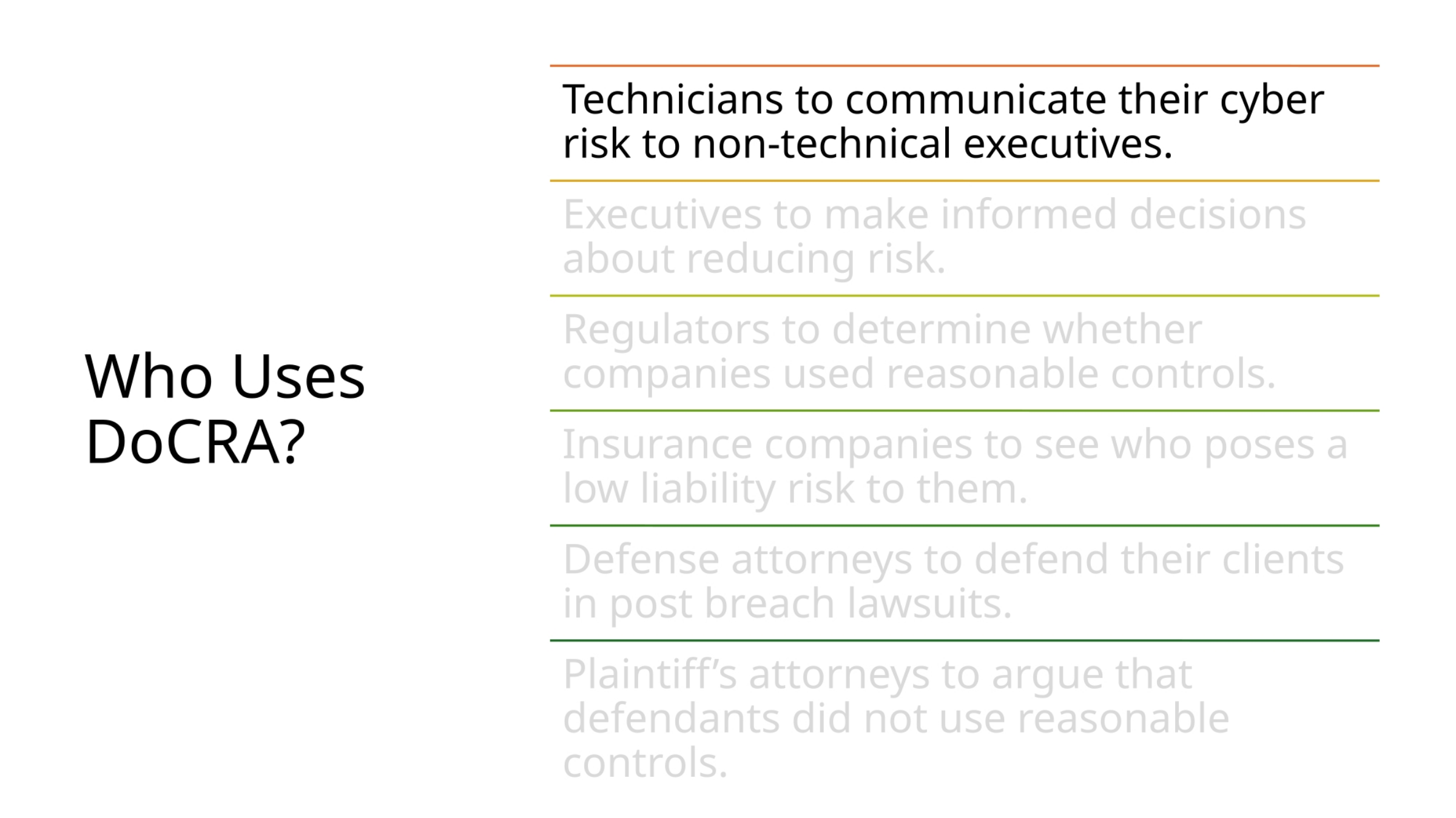
DoCRA is used by technicians to understand their risks, and then to communicate
those risks to executives using terms that help those executives make
informed decisions about budgets, resources, and priorities.
12. Who Uses DoCRA?
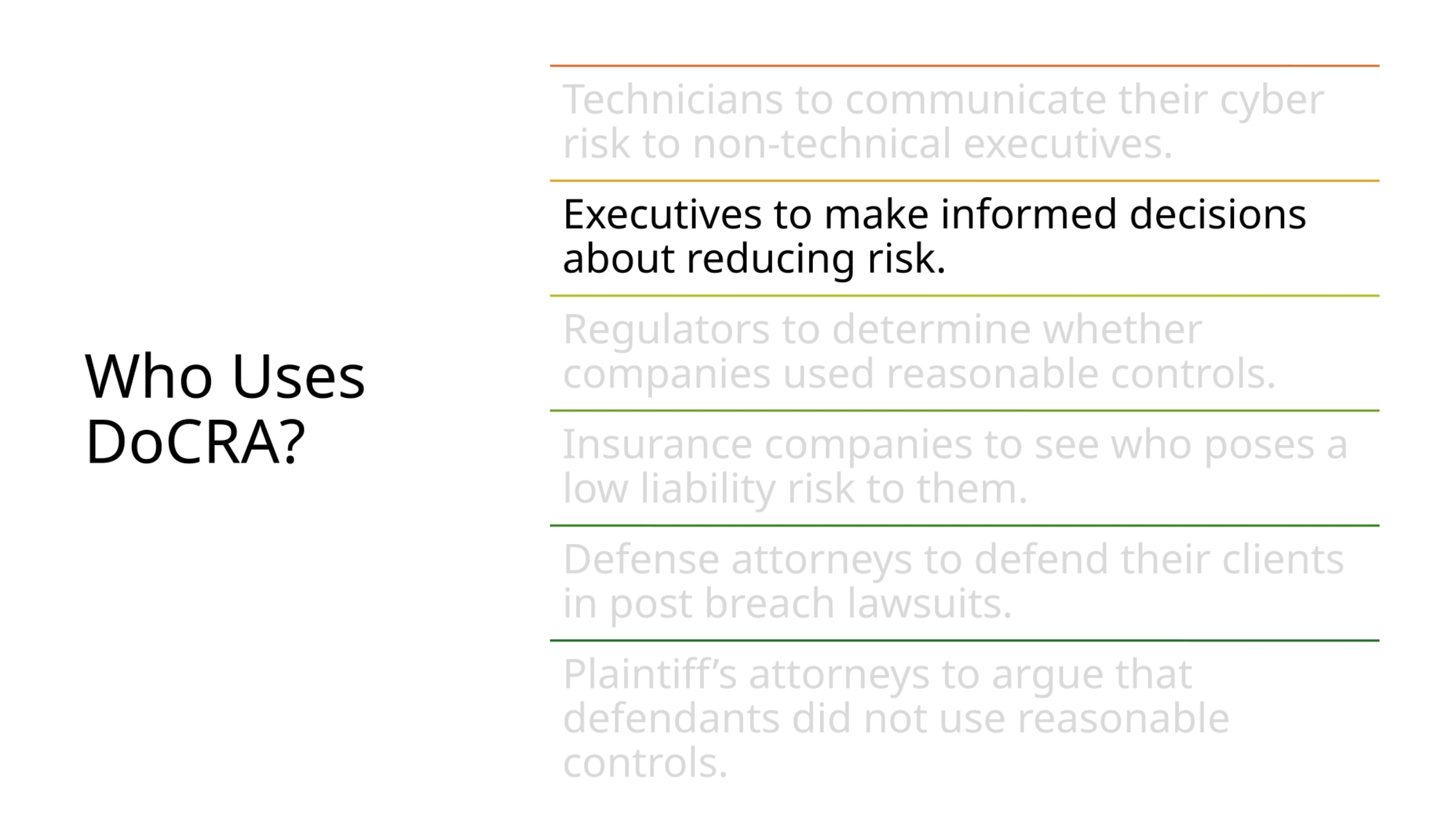
Executives use DoCRA to understand the risks that technicians become
aware of, and to determine whether the safeguards they are requesting
are reasonable given the risk.
13. Who Uses DoCRA?
Regulators have been using DoCRA to determine whether breached organizations
used reasonable cybersecurity controls, and to describe reasonableness
in ther settlements.
14. Who Uses DoCRA?
Insurance companies can quickly determine whether a policy holder is
a low risk or a high risk to their portfolio. Companies that can demonstrate
reasonableness can also eliminate that huge liability risk.
15. Who Uses DoCRA?
Defense attorneys who can demonstrate the reasonableness of their clients,
even after a breach.
16. Who Uses DoCRA?
And plaintiff's attorneys use DoCRA in their complaints to substantiate
their charges that breached organizations did not use reasonable controls.
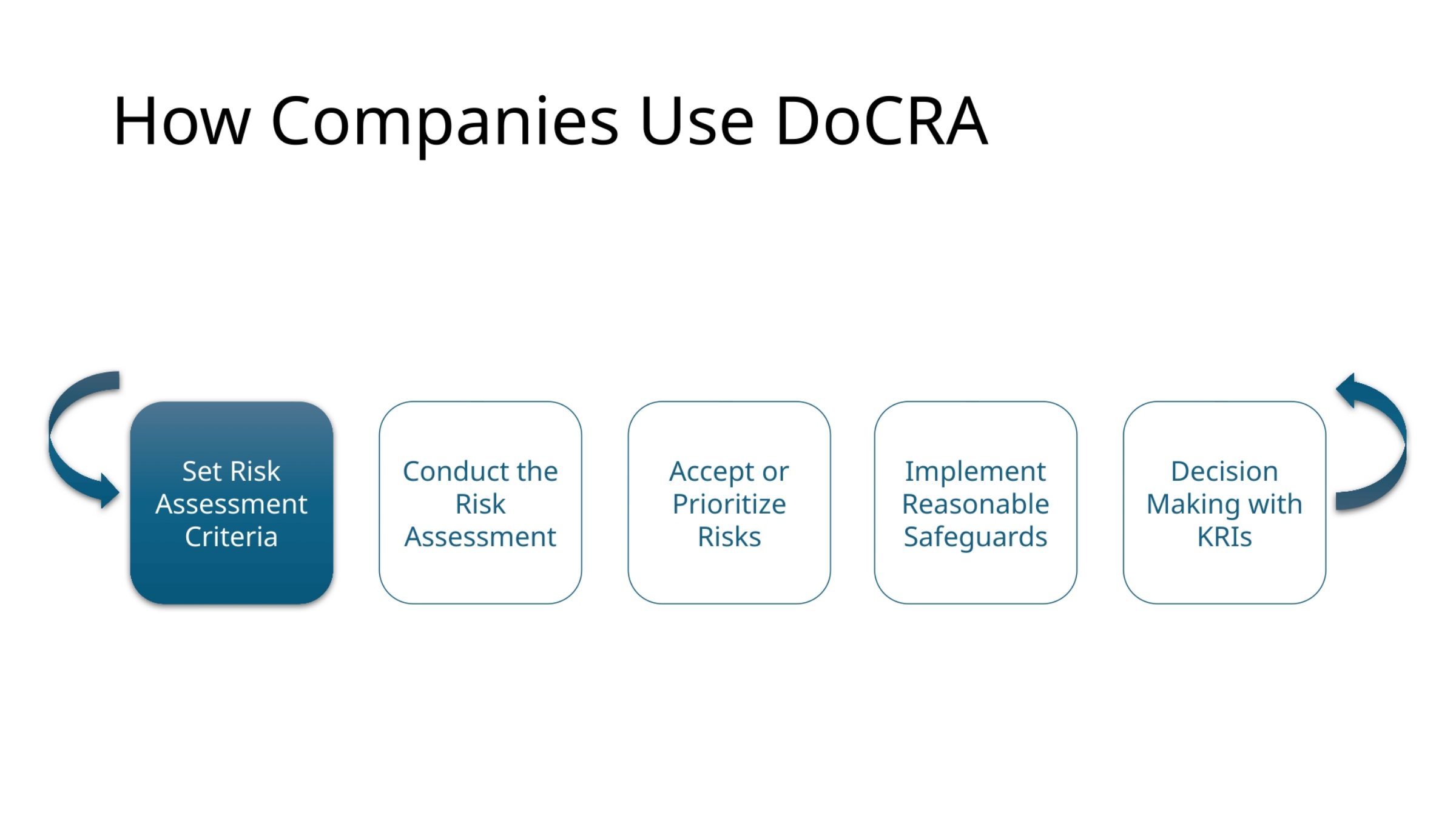
17. How Companies Use DoCRA
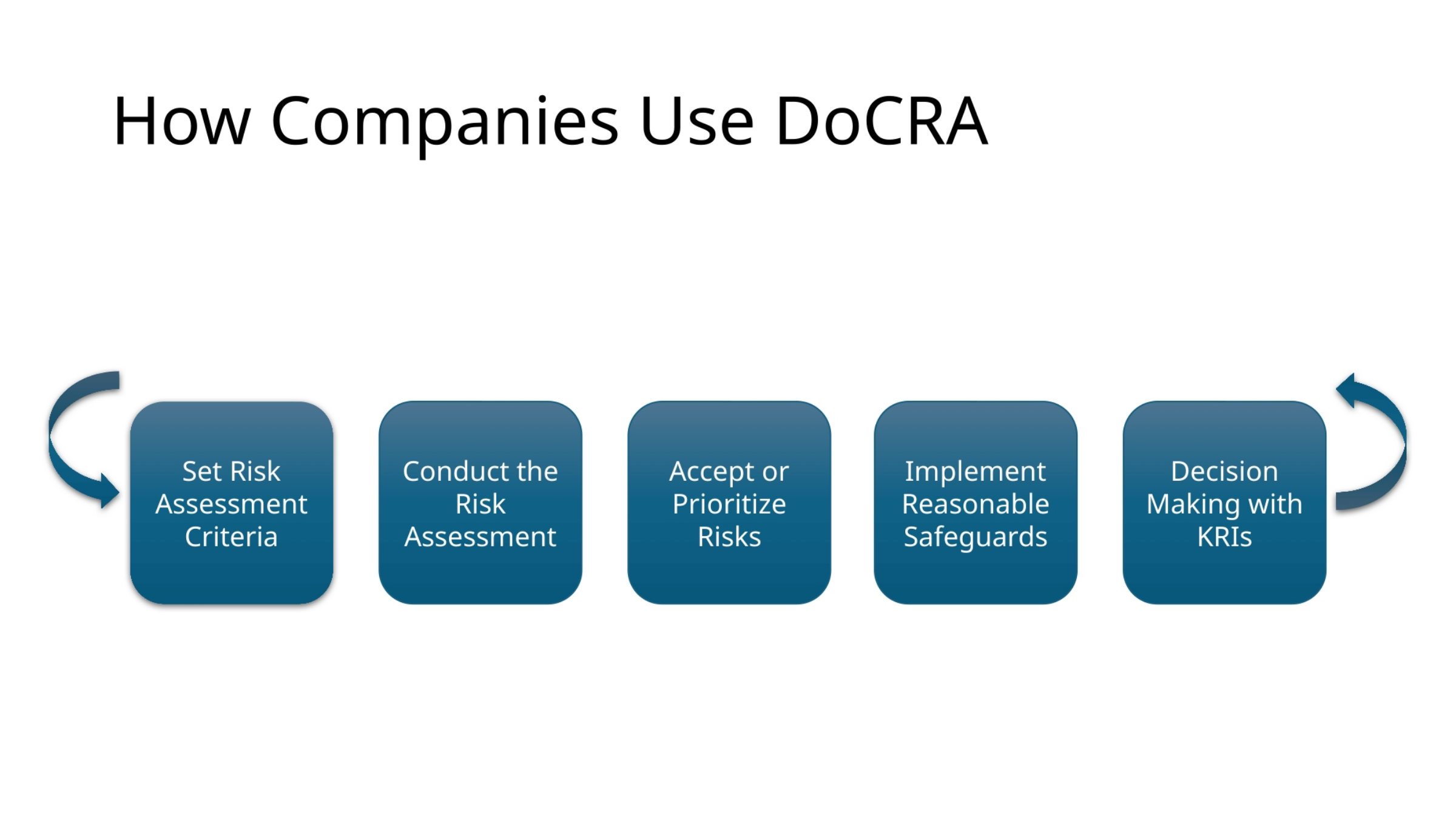
DoCRA professionals first help organizations define their risk assessment
criteria, including what would constitute acceptable or unacceptable
risk to the company and the public.
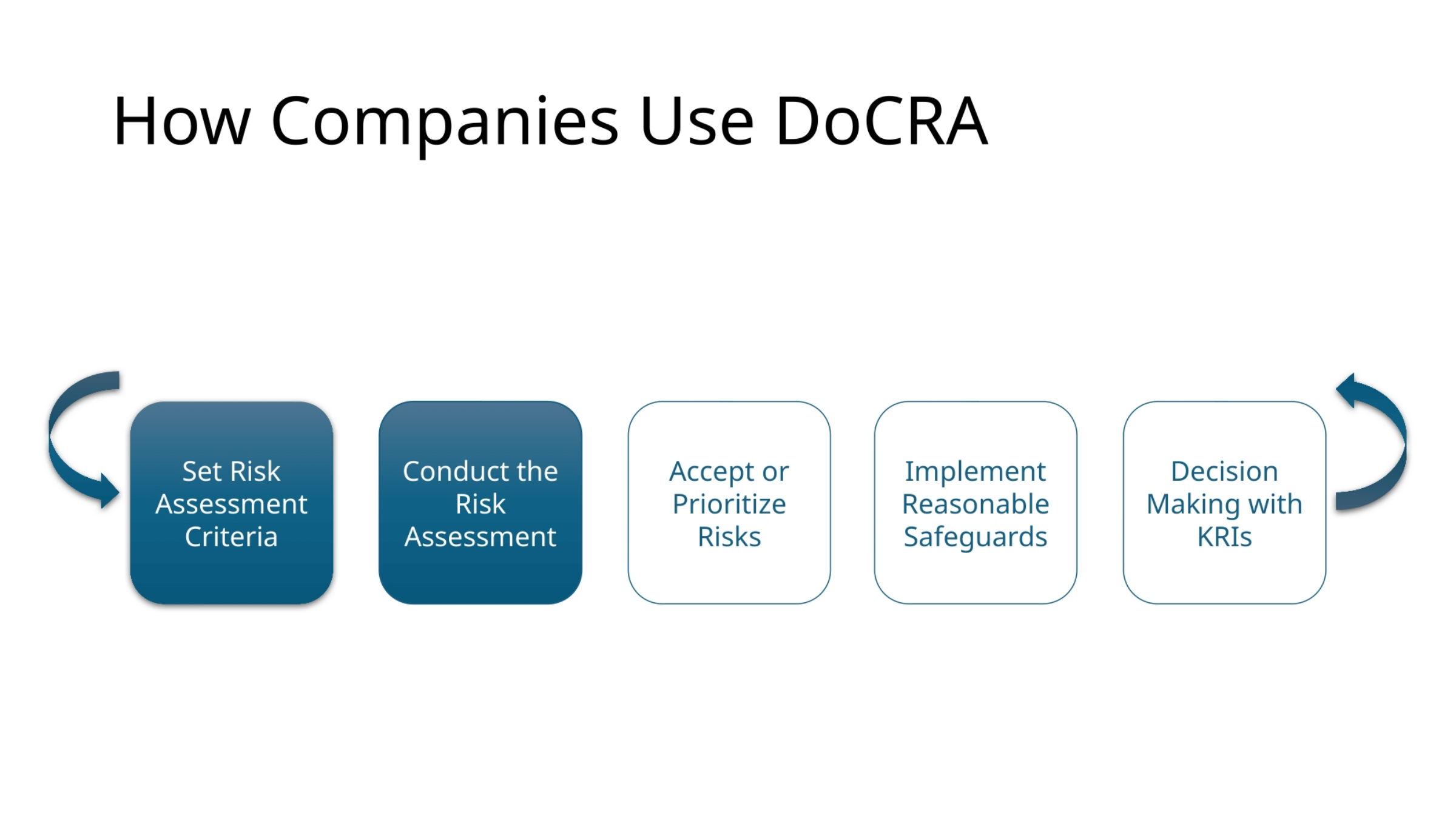
18. How Companies Use DoCRA
Next they perform a risk assessment, evaluating the likelihood and impact
of foreseeable threats.
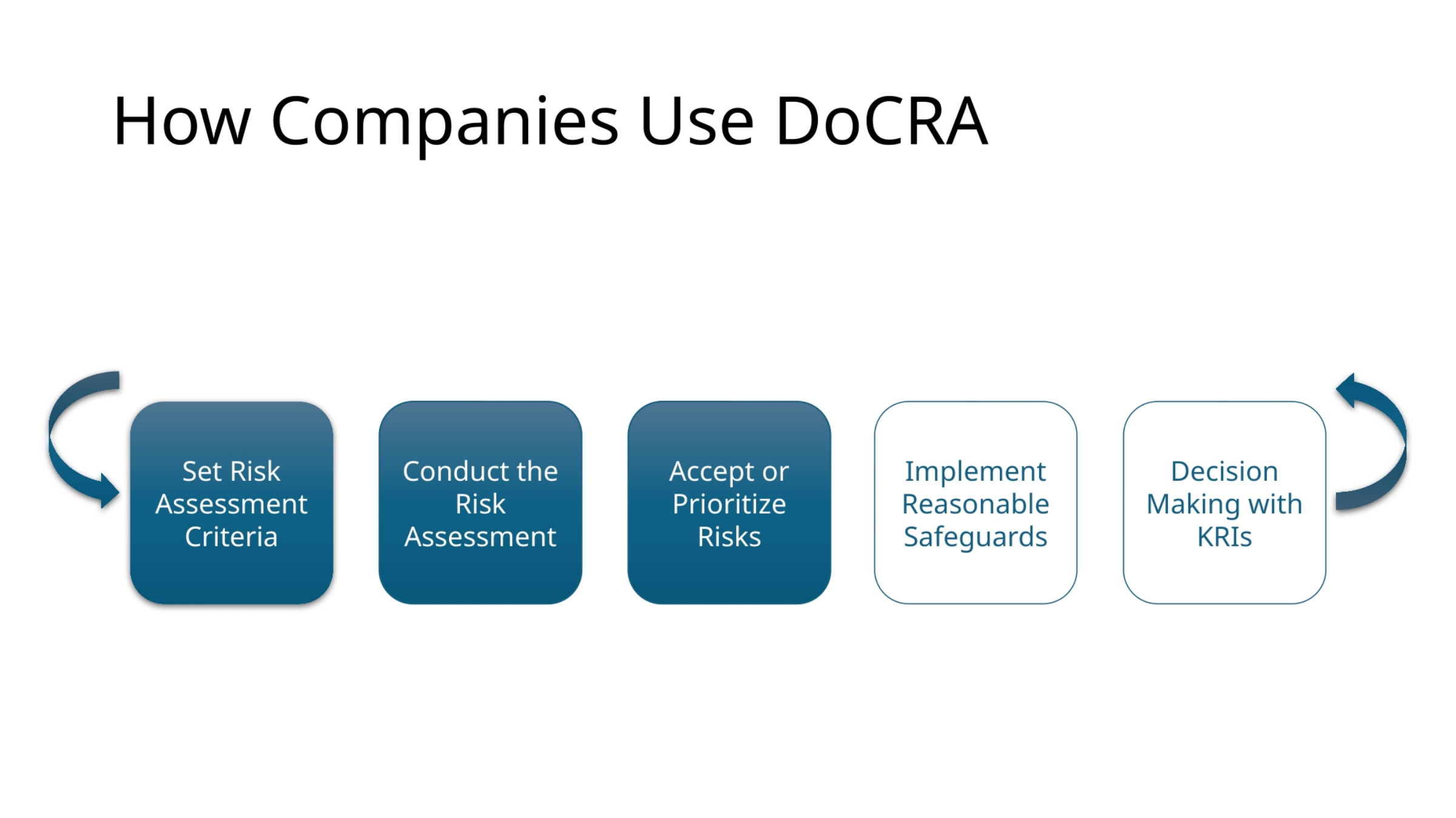
19. How Companies Use DoCRA
They accept risks that would not create a repairable harm, and prioritize
the improvement of controls based on the highest risks.
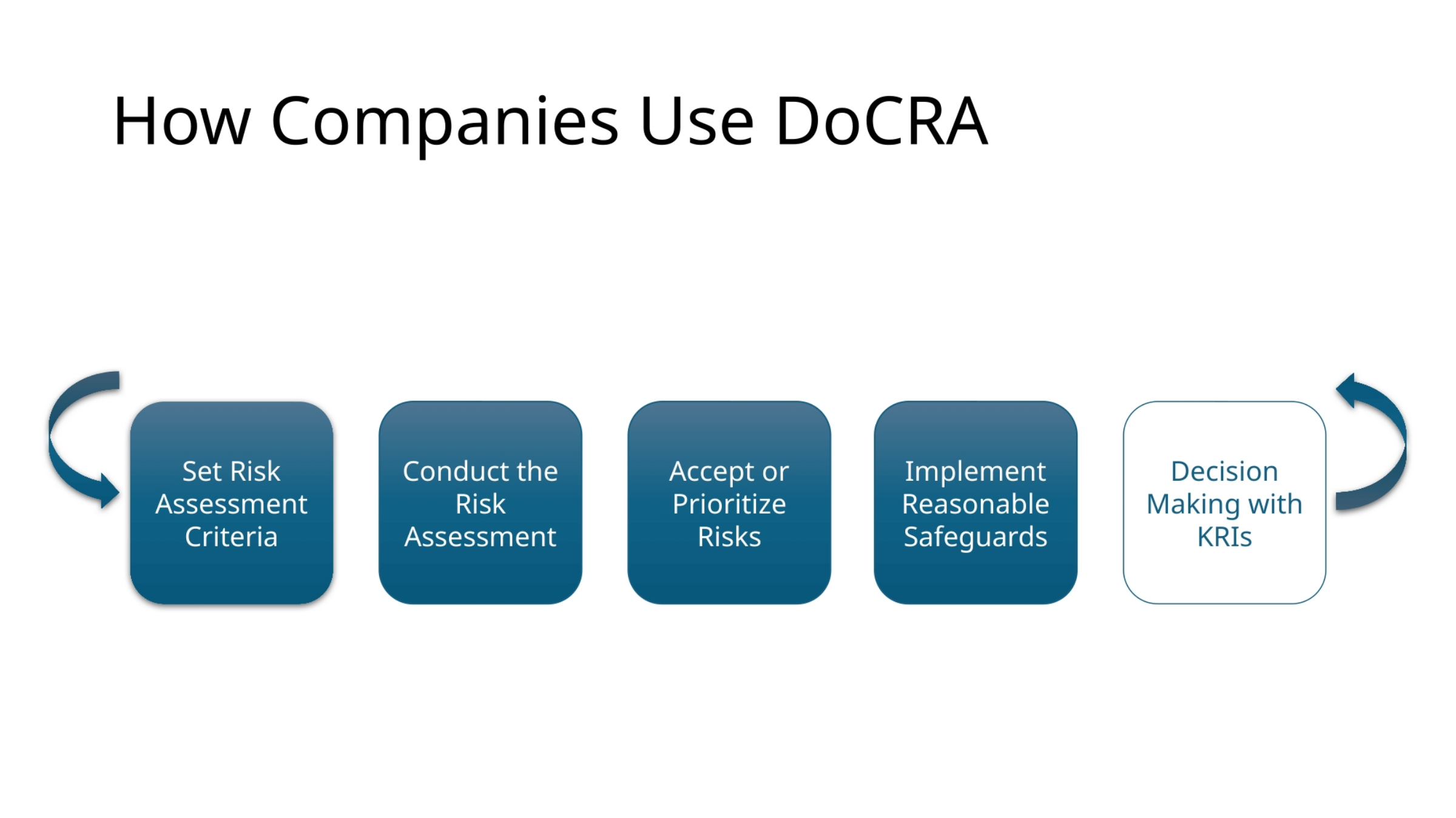
20. How Companies Use DoCRA
The DoCRA professional then helps the organization implement policies,
safeguards, and reporting capabilities to reduce risks over time.
21. How Companies Use DoCRA
And finally, they help organizations measure the performance of the risk
management program using Key Risk Indicators and to make informed decisions
based on those measures.
22. What is Risk Management and Governance?
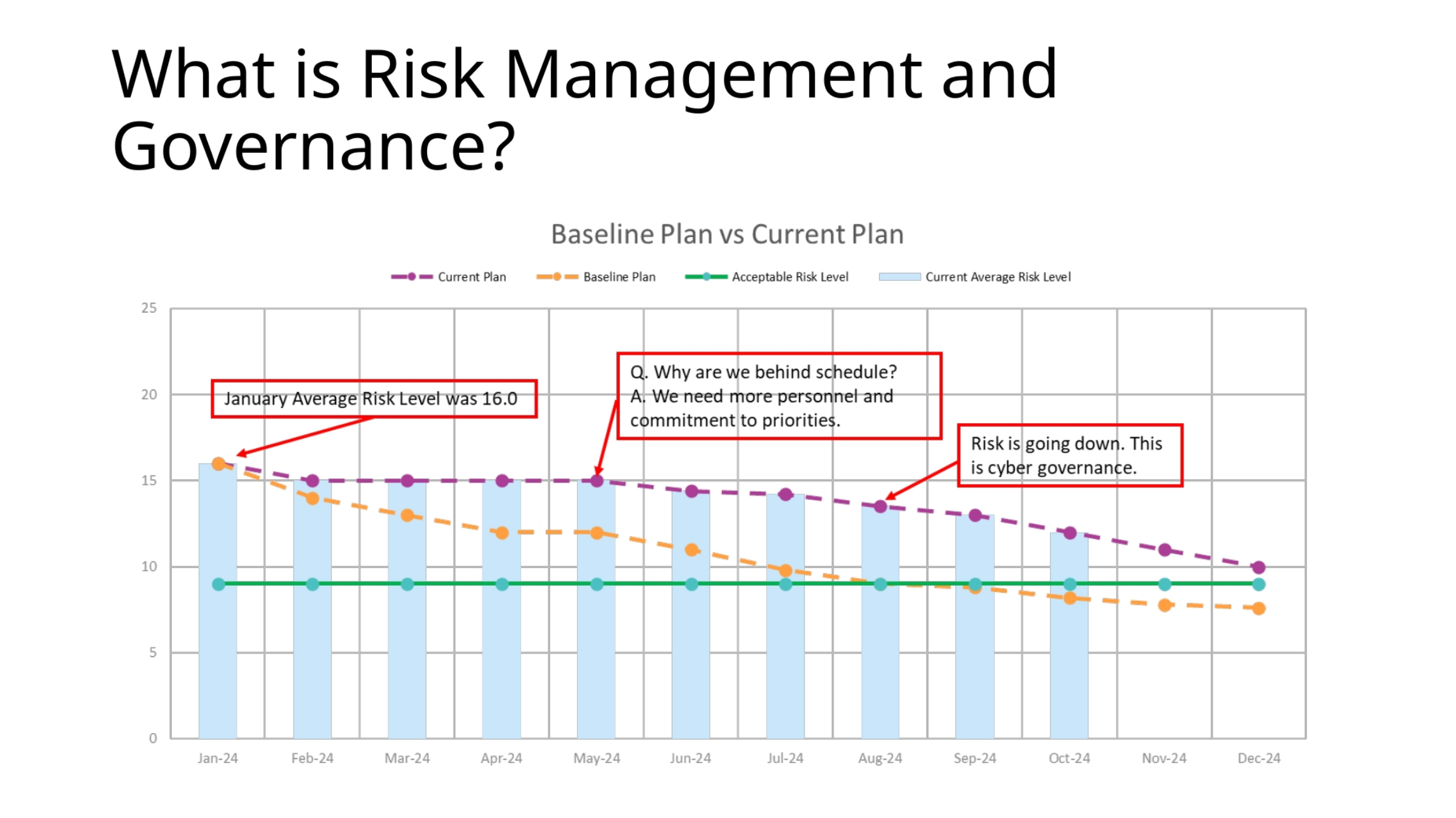
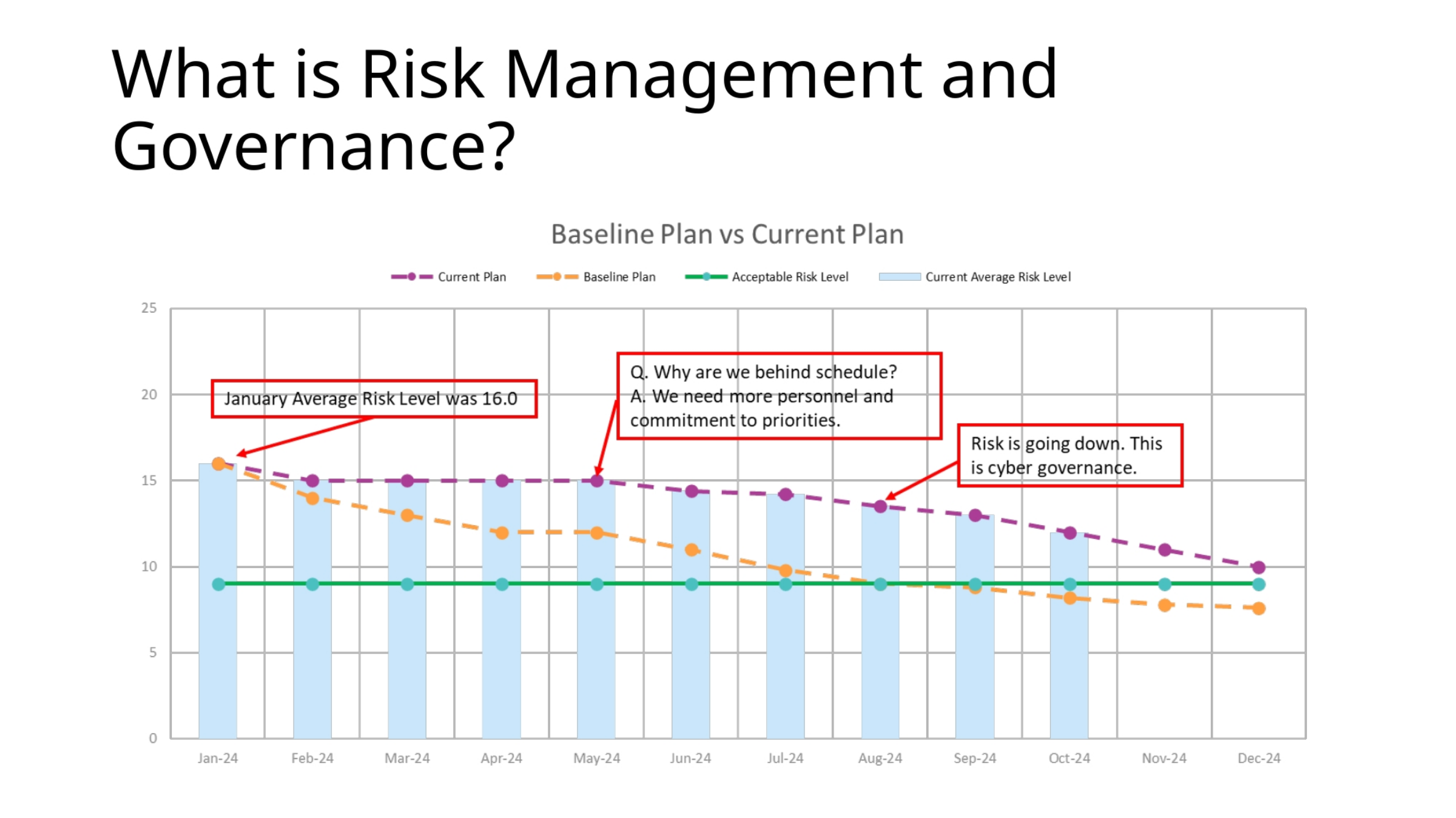
Using this KRI, executives and technicians can communicate about the
status of the cyber risk management program to see if it is effective,
and if not, what executives can do to help improve it.
23. What is Risk Management and Governance?
In January, the company knows its risk is too high. But they have a plan
for reducing risk to an acceptable level. That plan is traced by the
orange line. Every new safeguard they implement reduces risks, so as
long as those planned safeguards meet their deadline, the company will
meet its acceptable risk goals.
24. What is Risk Management and Governance?
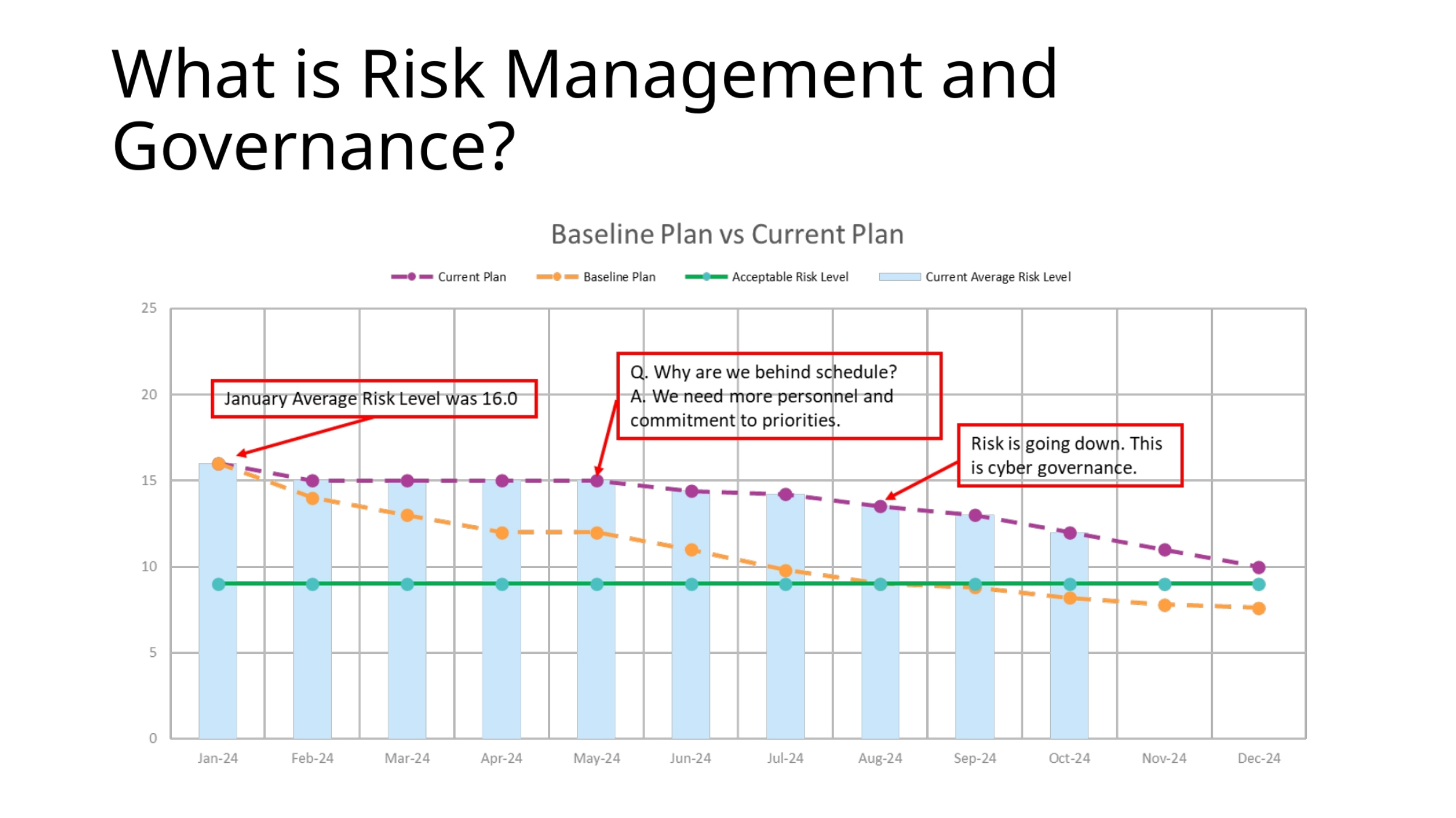
But by May, executives can tell that they are off plan. They are not
reducing risks because security projects are not completing. Executives
ask their technical managers what is causing projects to stall. This
gives technical managers the opportunity to describe the impact of shifting
corporate priorities, a lack of resources and budget, a need for more
personnel, or business departments not collaborating with the security
team to improve controls. These are the kinds of problems that executives
can solve.
25. What is Risk Management and Governance?
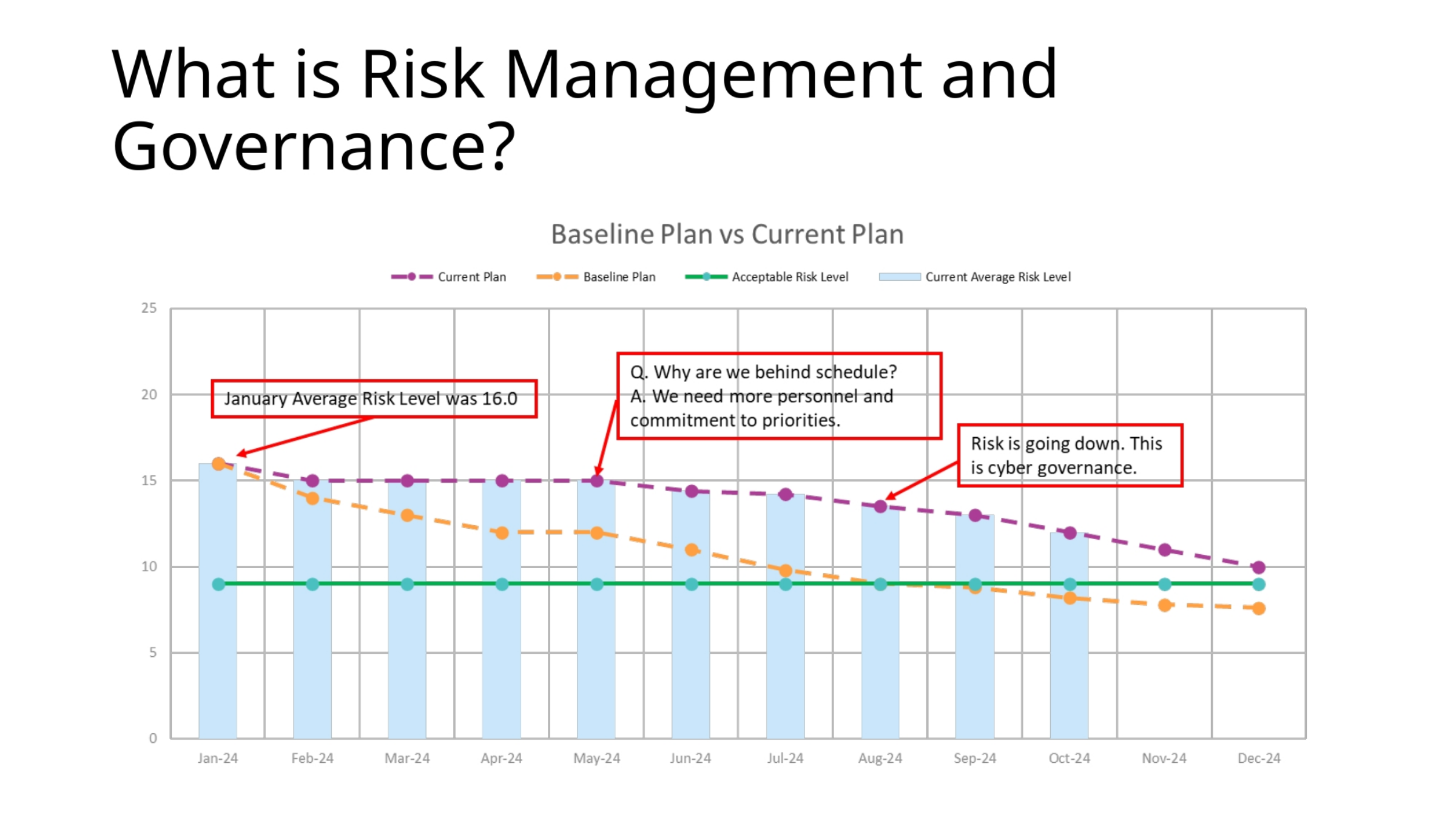
When executives decide to provide more resources, to commit to priorities,
or to enforce collaboration among peers, they can subsequently see the
company's risks go down. They can see the effect of their decisions
on risk reduction. This is effective cyber governance. And it is managing
cyber security like any other part of the business.
26. What Makes DoCRA Different?
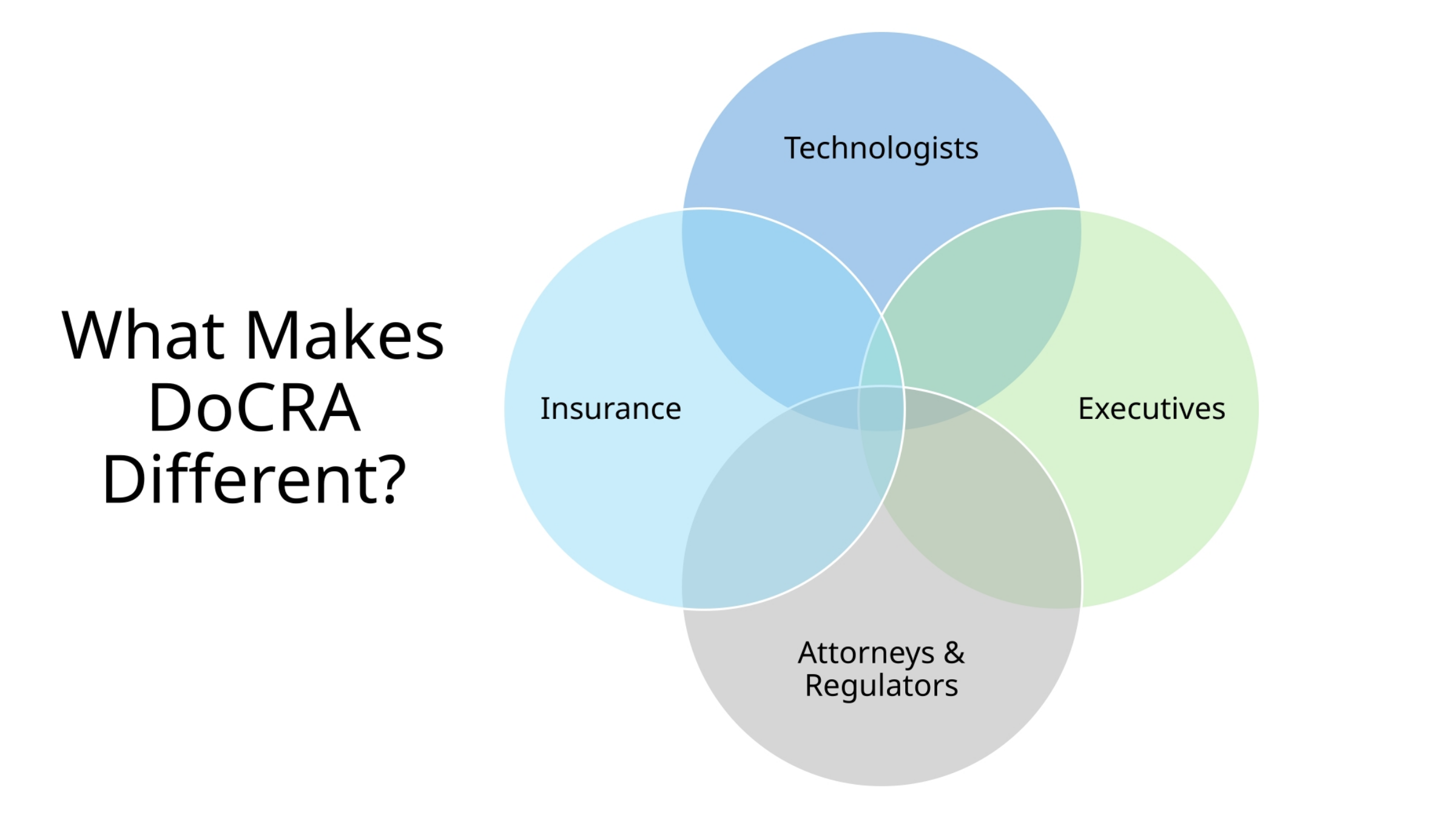
DoCRA is primarily a way for cyber risk management and governance to
finally make sense. But by combining the risk analysis principles from
insurance, law, technical standards, and business management, all risk
decisions will be immediately understandable to the interested parties
that can reduce the liabilities associated with incidents.
27.
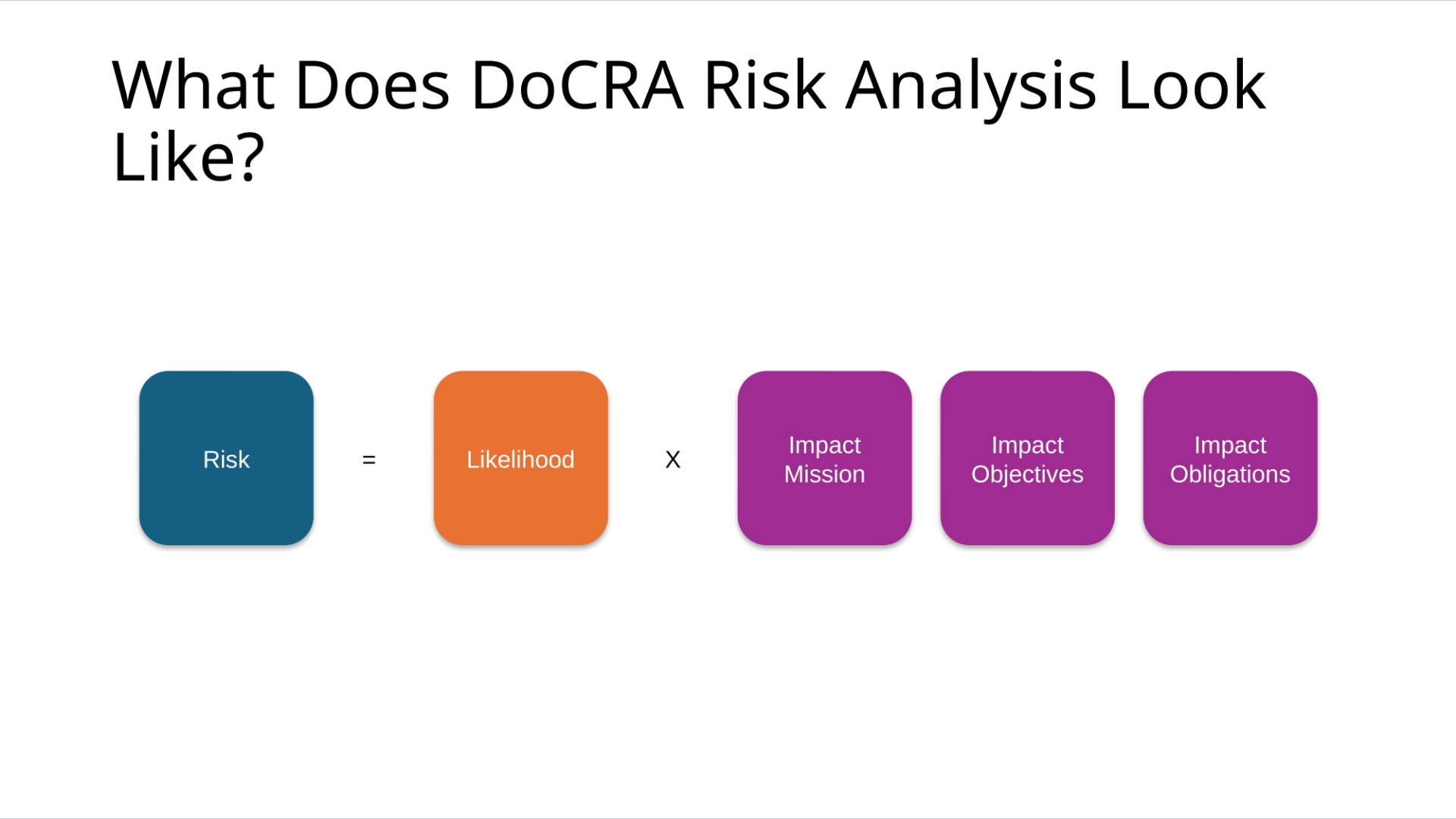
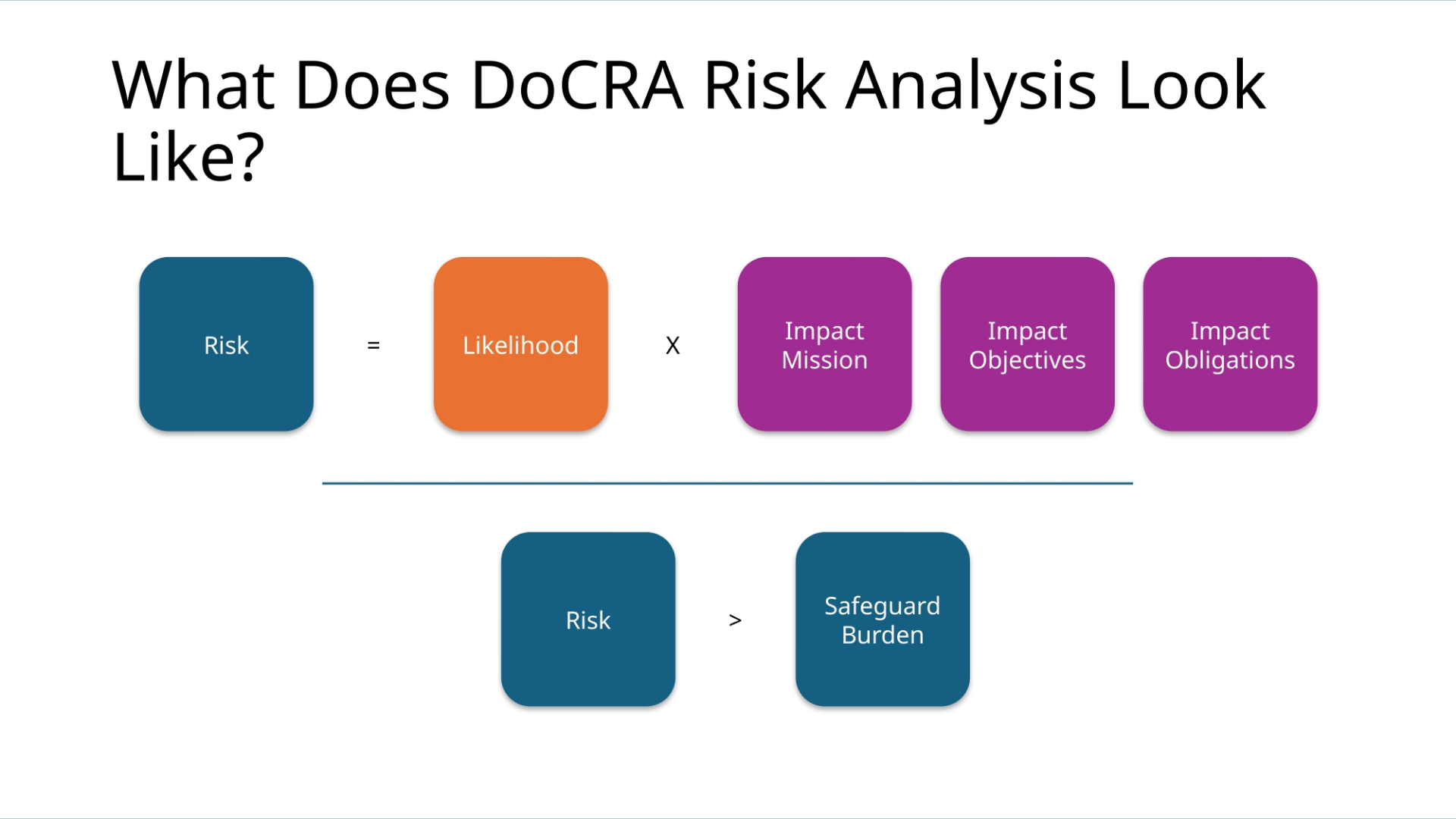
DoCRA risk analysis looks like standard risk assessments by combining
likelihood and impact. But it looks at the impact to the organization's
mission, its objectives, and its obligations to ensure that all parties
are considered in the risk assessment.
28.
One of the most attractive features of DoCRA is that it then examines
a proposed mitigating safeguard to be sure that the safeguard does not
hurt the company more than it helps the public. This concept has been
part of US law for decades and makes it difficult for litigators or regulators
to demonstrate negligence when companies suffer from an incident.
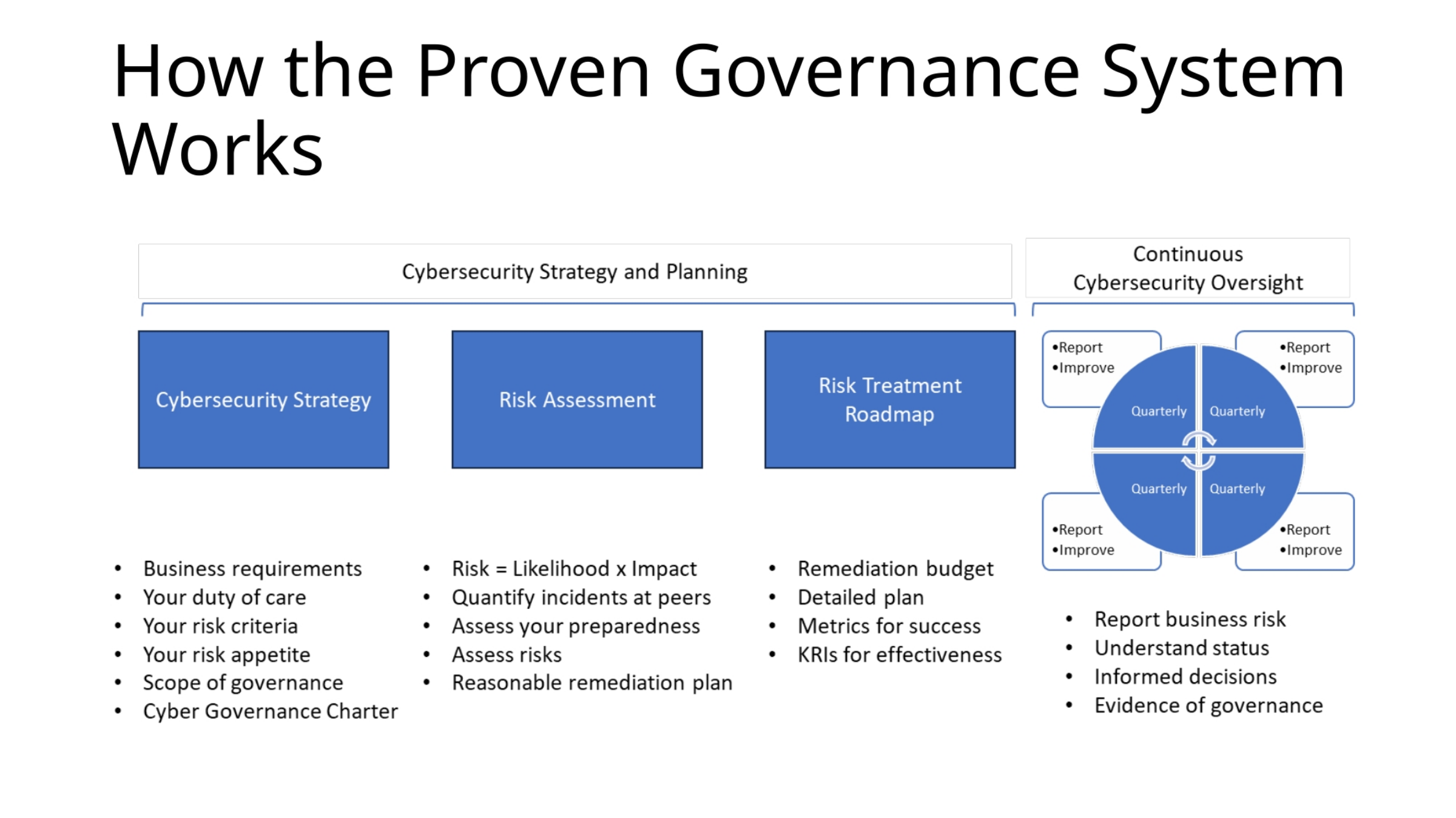
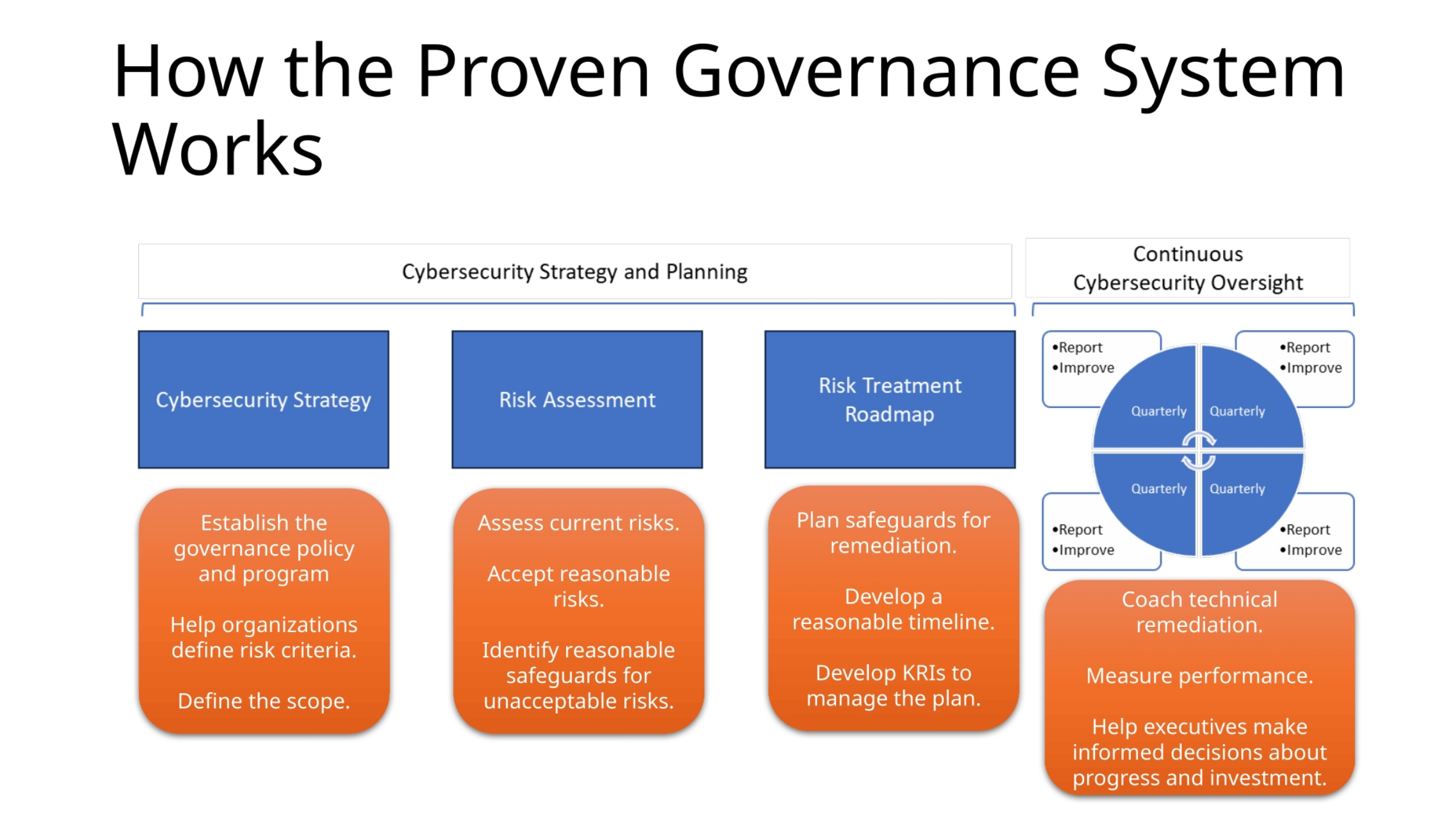
29. How the Proven Governance System Works
Reasonable Risk automates the Proven Governance System by helping develop
the risk assessment criteria and the scope of the program, by conducting
the risk analysis, by developing the risk remediation plan and budget,
by developing key risk indicators for the program, and by operating continuous
improvement activities, like reporting and measurably improving the program.
30.
Trained DoCRA professionals can use the processes we described here using
Reasonable Risk, a SaaS application that automates cybersecurity risk
management and governance.
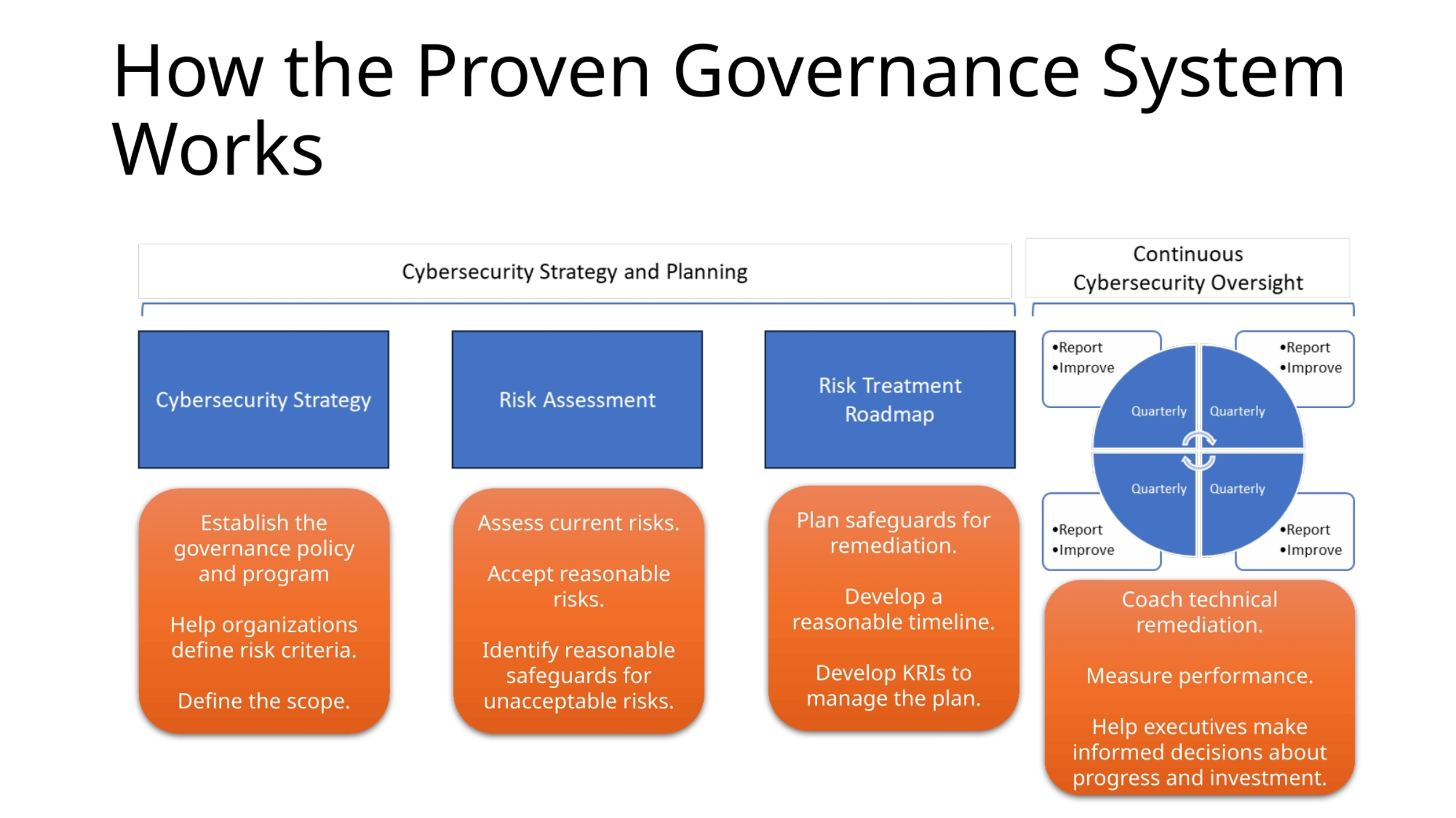
31. How the Proven Governance System Works
DoCRA professionals help organizations implement the Proven Governance
System by establishing the governance program, typically through documented
policies and kickoff meetings, and to define their risk assessment criteria.
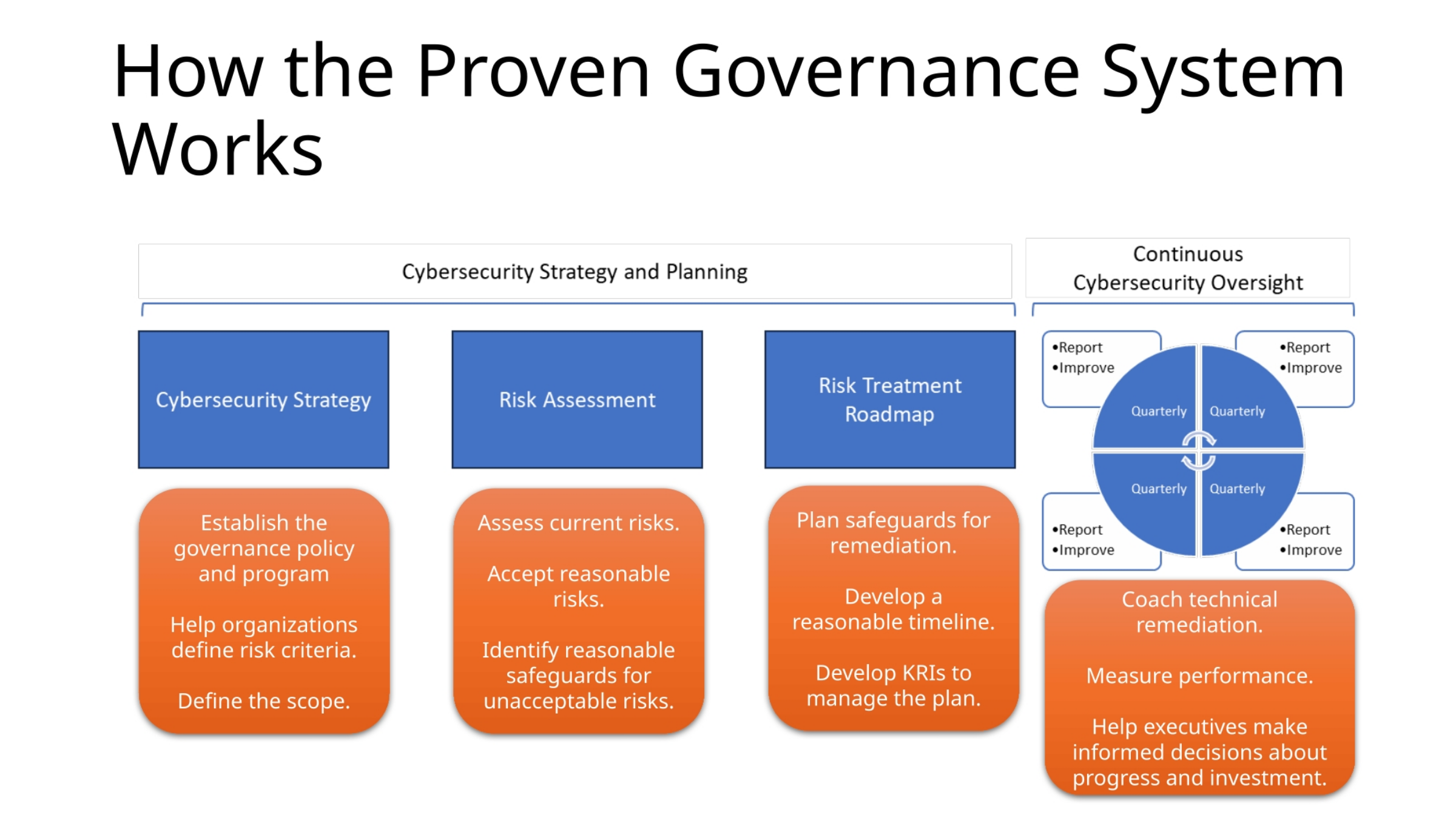
32. How the Proven Governance System Works
Those professionals then conduct the risk assessment for systems and
business processes in the program scope. The assessment results in a
prioritized list of controls, and recommended safeguards that would be
reasonable.
33. How the Proven Governance System Works
The risk treatment roadmap includes a plan for what safeguards will be
implemented when and with roughly what cost. This helps the organization
plan their risk reduction efforts, but also creates a model plan for
how risk will reduce over time.
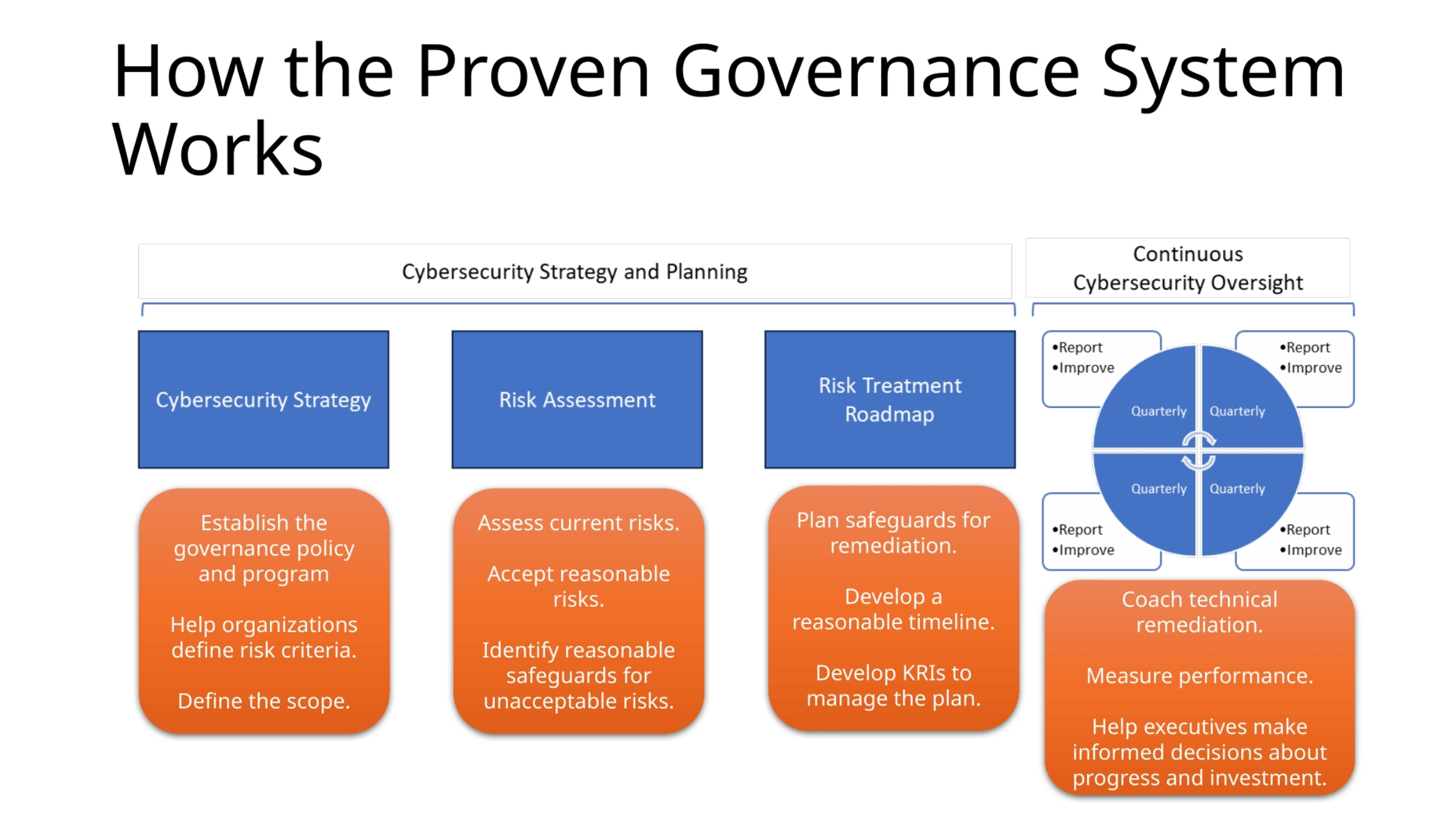
34. How the Proven Governance System Works
All of those activities lay the groundwork for risk management and governance.
But cyber governance is a learned behavior that takes time. Using
Reasonable Risk software, DoCRA professionals then help organizations
manage the implementation of policies and standards, implementing controls,
measuring the results of new and improved controls, and holding executive
level meetings to involve them in decision-making.
Using the Proven Governance System, DoCRA professionals can help organizations
improve their cyber risk management and governance programs as well as
they manage any other part of their business. Contact Reasonable
Risk to discover how you can bring measurable risk management to your
organization or clients.
Comments
0 comments
Please sign in to leave a comment.